• Imagen 1 Married to Prevent from Zina Actions
    Marriage is very important in the life of the Islamic ummah. Islam strongly encourages marriage, because marriage is valid according to sharia means has completed half of his faith and follow the sunnah of the Prophet Muhammad.
Bookmark and Share
Showing posts with label Islamic History. Show all posts

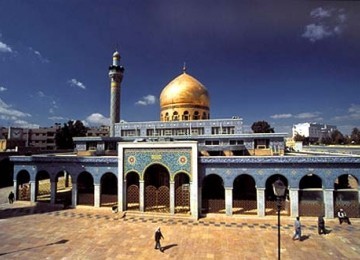
Lady Zainab Mosque of Damascus, Integration of All Forms of Beauty

One of the goals of pilgrimage and spiritual tourism draw another in Damascus, Syria, is the Mosque of Lady Zainab. Mosque graceful style as well as Iran's tomb is located in southern Damascus. The mosque is attracting Shiite Muslim pilgrims from Iran and around the world because of architectural pottery that bluish Sayiddah and the tomb of Zainab, the daughter of Ali bin Abi Talib, the granddaughter of Prophet Muhammad.

Most of the tourists or pilgrims who visited Damascus often miss the tomb of Lady Zainab, but its existence is very valuable as a building full of beautiful and emotional scene for Shiite Muslims in Karbala and Najaf out in Iraq. Visiting this place is so easy to use taxis, and even non-Muslim visitors are welcome to come, but it is limited outside the tomb area.


Tomb and Masjid Zainab Sayiddah is believed to be the former home of Siti Zainab, daughter of Ali bin Abi Talib (the fourth Caliph Rasyidah). He was taken prisoner by the army of Yazid bin Muawiyah after the massacre of his brothers, Hassan and Hussein, in Karbala and Najaf. For Shiite Muslims today, when families Ali betrayed is a decisive moment and the most tragic in their history. Thus, the atmosphere at Lady Zainab Mosque compound is not a ritual or worship a calm and quiet, but the passion that diruapi mourning lament, singing, crying and 'torture' ourselves with chest pounding.

The mosque itself was built since the 1990s, on top of an existing cemetery. Indeed, the location of this mosque is a bit hard to find, he is like hidden behind a row of shops, markets and hotels. To find it, simply by looking at one of the towering blue towers, or better yet, by following the flow of black-robed pilgrims who flowed toward the entrance.

This mosque consists of a courtyard with buildings in the middle. In architecture, this mosque has all the characteristics typical of Iran's mosques, decorative ceramic ornaments featuring blue, gold layer, and mirror glass. The mosque is protected shiny gold dome.

Page mosques are full of men and women who marched in a circle, singing songs in Persian or Arabic, banging their chests. Often this action deliberately recorded with a video camera. The scene is led by a priest.

When the singing and beating his chest, the flow of tears rolled down their cheeks, as if they felt the painful tragedy experienced by Zainab when lost brother and a prisoner. In this ritual, as if they were attending his own funeral Zainab. And that's how Shia look at the events that befall the Prophet's grandson.

Tomb complex itself is divided into two parts; for men and women. Footwear must be left at the front door of the tomb. The room's tomb, though relatively small but always crowded. Space for the congregation of women and men are only limited by thin wooden walls. Laments and sobs of the two parts are inter-shouted replied to the other side.

Not only from the room a woman, from any room pilgrimage men sobs that sounded no less thrill. All those present, old or young to sit in a circle while hitting his chest, weeping and wailing. Ekstasenya So, some people even threw myself into the tomb wall, hugging, rounded and shower with kisses. Others knelt and prayed, their foreheads against the stone fragments taken from the earth of Karbala.

Historians say that Mousa Murtadha-grandfather's tomb guard the tomb-building complex from a mixture of stone, brick and wood. In 1870 the ceiling is shattered tomb was renovated with brick and wood frame reinforced by Salim Murtadha, which gave custody to her son's tomb, and then its successor the eldest. Currently Lady Zainab's tomb complex is managed by a committee co-chaired by Hani Murtadha and Mohammad Ridha Murtadha.

In 1952, Mohammad Rida Murtadha prepare Lady Zainab Mosque complex scheme with an area of ​​150 x 190 meters square; widely page 90 x 90 meter wide main hall square and the mosque 30 X 30 square meters. Mosque floor covered with shiny marble tiles. This mosque has four gates, each four meters wide with a porch area of ​​four meters, too.

10-meter-high roof of the mosque is covered with ceramic and porcelain beautiful Iran. Plates coated with pure gold dome that makes it sparkling in the day or night, more attractive viewed from all directions.

If architecture is considered as an integrated art prints, then the Lady Zainab Mosque represents the value of aesthetics and modern Islamic architecture. He enriches the Islamic heritage and the heritage of the world because mempertautkan all forms of artistic beauty, photography, jewelry, calligraphy, as well as applied arts such as porcelain, mirrors, glass, decor, carpet weaving, and wrapping lighting.

To expand the area of ​​the mosque, on the recommendation of the Minister waqaf and the Department of Housing, the committee bought several real estate development next to it in 1979 and allocate the necessary budget to launch the expansion project, which until now has not been done.

The Committee made the mosque as a religious tourism business worked professionally with employees as many as 90 people. One of the other committee duties is to fund and protect the mosque and manage finances. Now the Lady Zainab Mosque is one of the religious tourist sites in Syria, visited by more than a half million people each year.

Source:www.republika.co.id
Read More...
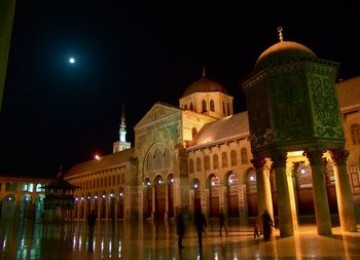
Great Mosque of Damascus, the Umayyad Daula Heritage

One of the places worth visiting or diziarahi in the Middle East is the Great Mosque of Damascus, better known as the Umayyad Mosque. He was one of the oldest and sacred in the world, located in the Syrian capital, Damascus.

In masjdi complex, in a small park next to the north wall there is the Tomb Salahuddin Al-Ayyubi, famous heroes in Islamic history. In addition, the mosque is said to store a small shrine containing the head of John the Baptist, which considered a prophet by Christians.


Damascus is believed as one of the oldest cities in the world that mankind inhabited by successive civilizations. And among the civilizations that once proliferated in this city is Islam.
Umayyad Mosque which stood on ground considered sacred for at least 3,000 years. About 1,000 years before Christ, the Syrians build a temple-mosque at the site where the stand-a place of worship of Hadad, the god of storms and lightning. A orthostat basalt (rock) that comes from this period, pictorial sphinx, found in the northeast corner of the mosque.

In the early first century AD, the Romans arrived and built a large temple to the god Jupiter on the temple of Syria. This Roman temple stood on the porch of a rectangular (temenos), which measures about 385 meters 305 meters, with a square tower at each corner. Section outer temenos wall still survive, but almost nothing remains of the temple itself.
At the end of the 4th century, the temples into Christian holy sites. Jupiter Temple was destroyed and a church built on it as a gift to John the Baptist.

Emperor Theodosius (330 AD) forbade the worship of the gods and convert this building into a cathedral church by the name of St. John Baptist Church Basilica. The Church is believed to be the place to capture the head of John, and became the most important sites as
pilgrimage destination in the Byzantine era.

During the Umayyad Dynasty (661-750 AD), Damascus became the capital of the Islamic world. The Umayyad caliph who ruled from Damascus over the entire region, from Spain through to India. Historically, Islamic civilization has left many beautiful buildings in Damascus, capital of Syria.

Umayyad Mosque (Umawi) built during the Caliph Al-Walid ibn Abdul Malik (88-97 H/705-715 M) of the Umayyad dynasty. Its architecture has an impact for the arts build mosques throughout the world. From this mosque, the Islamic architecture began to recognize the arches, square towers, and maksurah.

Initially, the Muslim conquest of Damascus in 636 AD did not affect the church, because the building was used jointly by Muslims and Christians. The building is still a church and increasingly attracting Christian pilgrims. The Muslims built mud-brick structure on the south wall so that they can perform prayers.

However, the Caliph Al-Walid finally destroy the church and build a mosque. Khalifah provide compensation for the Christians as compensation. It is said that the story, Al-Walid himself who started the demolition with gold rivet nails into the church.

At that time, Damascus was one of the most important city in the Middle East and became the capital of the Umayyad Caliphate. Umayyad Mosque was built with a magnificent structure, which involves thousands of workers and craftsmen Coptic, Persian, Indian and Byzantine.

Umayyad Mosque was renovated several times due to fires in the years 1069, 1401 and 1893. In 2001 Pope John Paul II visited the mosque, primarily to visit the relics of John the Baptist. This is the first time a pope visited the mosque.

Umayyad Mosque is one of the most impressive buildings in the Islamic world, a page that airy and spacious prayer hall. Some of the original mosaics of the 8th century are still preserved. Towers built in the Al-Walid also remains still survive until today.

Great Mosque Umayyad Mosque of Damascus or, sometimes also called the Mosque Umawi, very well worth a visit and become a pilgrimage destination if there is opportunity and ease to get there. He is one symbol of the triumph of Islam that is left up to now.

Source:www.republika.co.id
Read More...
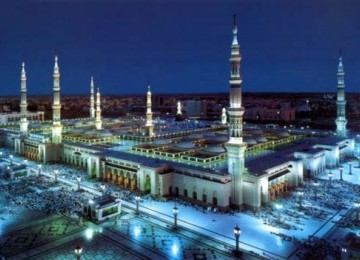
Nabawi Mosque, the Mosque of the Prophet

City of Medina, commonly called Madinah Al-Munawwarah, is the main city in Saudi Arabia. Medina is a bustling city diziarahi or visited by the Muslims from all over the world. There is where the Prophet's Mosque, one of the three main mosques in addition to the Grand Mosque in Makkah and Masjid Aqsa in Jerusalem, Palestine.

The Prophet once said, "Madinah is haram (holy land) from this to this, should not be cut (cut) tree, and should not be carried out heresy in it. Whoever makes heresy (or protect those who do heretics) on it, then he hit curse of Allah, angels, and all mankind. "


The town is located about 600 miles north of Makkah Municipality has a population of about 600,000 inhabitants. For Muslims this city is considered as the second holy city after Mecca. At the time of the Prophet Muhammad SAW, this town became the center of preaching, teaching and the Islamic government. This is where the message of Islam spread throughout the Arabian peninsula and throughout the world.

Early in the development of Islamic preaching, this area known as Yathrib, a center of economy and trade in the region. When the Prophet migrated from Mecca this city, he later changed his name to Medina. Gradually the city became the center of propaganda and the Islamic government until the Prophet died and was buried there.
Prophet's Mosque is the second mosque built by the Prophet after the Quba Mosque, founded in the course of his hijrah from Mecca to Medina. Prophet's Mosque is the first mosque built the Prophet when he arrived in Yathrib (Madinah).

Its location is the place where he stopped the camel ride. This place is a place for drying dates originally owned by two orphan brothers Sahl and Suhail bin Amr. Rasulullah then buy it and then build a mosque and his residence.

Originally the mosque was built is very simple, with a clay material, piled palm trees and thatched palm midrib. Foundation only in the form of stacked clay mold stack. The Prophet himself who led the construction of a mosque measuring approximately 50 mx 50 m is approximately in 622 AD.

The layout of the mosque building was deliberately made governance a bit like building a house of the Prophet in Makkah. Part of the roof of the mosque was left open just like that. During the first nine years, this mosque without lighting at night. Only at the time of Isha, held a little illumination by burning straw.

After that, on one side of the mosque, built the residence of the Prophet. The residence of the Prophet is not how much and nothing more luxurious than the state mosque, of course, only more closed. In addition, there are also parts of the mosque which is used as a place of poor people who do not own a house, known as the Ahl Suffah or the occupants of the terrace of the mosque.

After that many times the mosque was renovated and expanded. Renovation of the first undertaken by the Caliph Umar ibn al-Khattab in the year 17 H, and the second by the caliph Uthman ibn Affan in the year 29 AH Later in the ruling Umayyad dynasty, Caliph al-Walid ordered the architects and engineers Arab expansion and the physical restoration of building the Mosque of the Prophet, another term of Masjid Nabawi.

Although these large-scale development, but the Caliph still wants the original structure of the mosque is not changed. In addition, the executing engineers also built the tower that serves as a muezzin call to prayer chanted. Minaret, at the time, considered a new element in the architecture of the mosque.

In the reign of Sultan Abdul-Majid I-Ottoman Dynasty-Nabawi Mosque renovation again occur. This time on a large scale. The Emperor ordered that all buildings demolished mosque, except the Prophet's room. Further expansion of the mosque to be rebuilt with up to 1293 meters. This is the last expansion before the Prophet's Mosque is handled by the government of Saudi Arabia.

At the time of King Fahd, the Prophet's Mosque again expanded in 1414 H, so that the building area of ​​almost 100,000 square meters. Coupled with the construction of floors above the vast reaches 67,000 square meters and the court which can be used for prayer area of ​​135,000 sq. m. The entire complex of Nabawi Mosque can now accommodate approximately 700,000 pilgrims.

Prophet's Mosque has a number of virtues, such as the Prophet stated, "One prayer in this masjidku, greater reward than a thousand times prayers in other mosques, except in the Grand Mosque. And one more time praying in the Grand Mosque more than one hundred major thousand times prayers in other mosques. " (Reported by Ahmad)

"No need to put up the vehicle, except for visiting three mosques: Masjid al-Haram, this masjidku (Masjid Nabawi), and the Aqsa Mosque." (Bukhari, Muslim and Abu Dawud)

That's why the City of Medina and especially the Prophet's Mosque is the Muslims are always crowded with visitors from all over the world when the pilgrimage or Umrah.

In the Prophet's Mosque have a place called Raudhah (Parks), a place where all the prayers and diijabah granted by Allah SWT. No wonder the Hajj or Umrah pilgrims would spend the time to pray in this glorious place.

Source:www.republika.co.id
Read More...

Holy Mosque Throughout The Islamic History

Grand Mosque is a holy mosques throughout the Islamic history. This is where the Hajj and Umrah concentrated, especially tawaf around the Kaaba. Grand Mosque in the holy city of Mecca, a city revered for being the Kaaba, the first house which is used as the center of worship to Allah SWT.

Ra of Abu Dhar, he said, "I asked, 'Messenger of Allah, Which mosque was first built?" He replied, 'Haram'. I asked, 'Then (the mosque) where? " He replied, 'Then the Aqsa Mosque'. I asked, 'What is the distance between the two? " He replied, "Forty years. After the prayer meet you anywhere after that, then pray, because there is virtue to him." (Bukhari-Muslim)


Inside the Grand Mosque Kaaba there is a direction of the Qibla of Muslims during prayer times. The mosque was first built by the Caliph Omar permanently bin Al-Khattab in the year 638 AD

In the reign of Abdurrahman bin Zubair who ruled the Hijaz region, building the Kaaba made as the hadith of the Prophet peace be upon him about the foundation of Prophet Ibrahim. But because there were wars with Abdul Malik bin Marwan, ruler of Syria, the Kaaba on fire due to fire thrower (Manjaniq) owned Syrian troops.

So Abdul-Malik ibn Marwan who later became caliph, the renovation of the building back to the Kaaba by the renovation of the Holy Prophet at the age of 30 years, not based on the foundation that built Prophet Ibrahim. In its history the Kaaba several times been damaged by war and age of the building.
In the reign of Caliph Harun al-Rashid, Abbasid ruler Daula, he plans to renovate the back Kaaba in accordance with the foundation of Prophet Ibrahim and Prophet desired. But the intention is prevented by Imam Malik, one of the leading scholars, because it feared it would become a holy building khilafiyah problem by ruling later and could result in unloading pairs of the Kaaba. So until now the Kaaba building renovation and equipment in accordance with the Caliph Abdul Malik bin Marwan.

From time to time-Haram always experience the renewal and expansion, initiated by the Muslim caliphs who gives attention to the Grand Mosque. Large-scale development in the history initiated by King Fahd bin Abdul Aziz, who holds a "waiter Two Holy City of Makkah and Madinah."

At present Haram area 366 000 square meters and can accommodate 914,000 pilgrims in a time of prayer in congregation. The mosque is circling the Kaaba, the door a lot. There are 4 main doors and 45 normal door that is usually open 24 hours a day.

In this modern era, the Holy City of Mecca continued to clean up. Similarly, conditions in the vicinity of the Grand Mosque today. So many skyscraper buildings that surround the Grand Mosque. And now, the Grand Mosque was like a concrete jungle surrounded by challenging the sky. Makkah Construction seems to speed up in anticipation of increasingly pilgrims, both Hajj or Umrah, who came to Mecca each year. Now estimated at 2.5 million people have attended these holy rituals.

Because of the rapid development around the Grand Mosque, pilgrims sometimes wonder and awe. Fact, not rare or Umrah pilgrims who are confused and get lost looking for the road to the Grand Mosque and when returning to the inn.

However, modernity and the rapid development of the Grand Mosque and its surroundings, do not reduce the primacy of worship in this holy place. Haram has so many features, among other prayers at the main mosque more than a hundred thousand times prayers in other mosques. Likewise dhikr, prayer, charity and other good works.

From Abu Hurairah ra, he said, "Of the Prophet, he said, 'They should not bother to travel, except to three mosques, (namely) the Grand Mosque, Masjid Nabawi Prophet, and the Aqsa Mosque." (Reported by al-Bukhari and Muslim)

Inside the Grand Mosque are the Black Stone, the black stone in the religion of Islam is believed to come from heaven. The first to put the Black Stone at the Kaaba is the Prophet Ibrahim. This stone has a unique scent, natural aroma which has since the beginning of its existence. Currently, Black Stone placed on the outside of the Kaaba making it easy for pilgrims who wanted to kiss her.

At the Grand Mosque complex also contained Maqam Ibrahim. This place is not the tomb of Prophet Abraham as told by some people. Maqam Ibrahim is a small building located in the east of the Kaaba. Inside the building there is a rock where the Prophet Ibrahim when he built the Kaaba stand together as his son Prophet Ismail.

In addition, in the Grand Mosque are also Multazam, which lies between the Black Stone and the door of the Kaaba, a distance of approximately two meters. Named Multazam because dilazimkan for every Muslim to pray in this place. Each prayer is recited in Multazam, Insha Allah, will diijabah or granted.

Source: www.republika.co.id
Read More...

Justice of the Prophet for non-Muslim Peoples

By: Harun Yahya *

In the Qur'an, Allah commands the believers to be fair. "O believers, be you people who are firmly for justice, as witnesses for Allah even against yourselves or parents and the kin. If he is rich or poor, God knows better kemaslahatannya. So do not you go on air passion for wanting to deviate from the truth ... " (Surah An-Nisaa ': 135)

With his rules apply to Muslims, justice and tolerance towards people of different religions, languages, races, tribes, and his attitude that does not distinguish between rich and poor, but treating everybody the same. Prophet is the best role model for all mankind.

In a verse of the Quran to the Messenger of Allah said, "They are people who like listening to falsehood, of devouring anything forbidden. If they (Jews) come to you (to ask for the decision), then decide (this matter ) between them or turn away from them, if ye turn away from them, then they will not give you the slightest harm. And if you decide their case, then decide (this matter) in between them with justice. Truly Allah loves those who the fair. " (Surat al-Ma'idah: 42)


Obey the Prophet of Allah, even against a stubborn kind of people they (Jews), and he never made concessions in upholding justice. She became a role model of all time with the words, "My Lord commanded to run (enforce) justice." (Surat Al-A'raf: 29)

A number of incidents proves justice of the Prophet. He lived in a place where people of different religions, languages, races, and ethnic coexistence. It is very difficult for them to live together in peace and harmony and supervise those who are trying to spread disunity. One group can become aggressive and even attack the other group through words or deeds. However, justice is the source of the Prophet peace and security for other communities, just as applicable to Muslims.

During the time of Prophet Muhammad SAW, the Christians, Jews and pagans of all treated equally. Messenger of holding on to verse, "There is no compulsion to (enter), religion (Islam)," (Surat al-Baqara: 256), and explaining the true religion for all people, but frees them to make a choice themselves.
The attitude of the noble Prophet of Islam in total harmony with the morality of the Qur'an, should be a role model in treating the adherents of different religions. Justice of the Prophet provide an understanding to people of different races. In the sermon, his sermon, he often states that the advantage lies not in race but in godliness. As Allah states in the Qur'an, "... Verily the most honored of you in the sight of God is the most pious among you ..." (Surat al-Hujuraat: 13)

Two hadith, he emphasized the principle of justice: "You are children of Adam, and Adam came from dust. It should stop people boast of their ancestors" (Abu Dawud).

"Lo-nasabmu nasab be because you are not allowed to berate the person; you are all descendants of Adam ... No one is more than others, but because religion and takwanya ..." (Reported by Ahmad)

In Farewell Khutbah '(farewell sermon) Prophet emphasized several principles, "O mankind! Verily your Lord is one. Remember! There is no advantage over the Arabs above others Arabs, nor is there excess for people other than Arabs for Arabs, not too there is an excess of red-skinned people over black people, and not all black people on the red skin, but because of piety. For behold, the most honorable among you is the most pious to God. " (Bayhaqi)

The agreement made with the Najran Christians in southern Arabian Peninsula is another exemplary example of the Prophet justice. One of the clauses in the agreement reads, "Life Najran and its surrounding community, their religion, their land, property, livestock, and people who attend them or not, their messengers and their places of worship are under the protection of Allah and guardianship His Prophet (Muhammad). "

Medina Charter, signed by Muslim immigrants from Mecca, the indigenous people of Medina, and the Jews of Medina is another example of the importance of justice of Allah. As a result the constitution, which established justice between communities with different beliefs and ensure the protection of their interests, and end the hostilities that occurred over the years. One of the most remarkable feature of this agreement is dikokohkannya religious freedom.

Medina Charter One article states, "The Jews of Bani 'Awf are one nation with the Muslims. The Jews have their religion and Muslims have them."

Article 16 of the agreement reads, "The Jews who follow us certainly entitled to our support and equality the same rights as any of us. It will not be harmed or his enemies will not be helped."

The Prophet Companions to stick to the Charter of Medina that, even after his death. And they even apply to people Berbers, Buddhists, Brahmins, and people of other faiths.

One of the main reasons why the golden age of Islam is one of the shadow period of peace and security is a fair attitude of the Prophet, and it is a reflection of Qur'anic morality.

Therefore, the only solution to stop the fighting and conflicts around the world is to adopt the morality of the Qur'an. As the Holy Prophet, he was never away from the path of justice, and he never discriminate people based on religion, language, or race.

* Harun Yahya was born in Ankara in 1956. He studied fine arts at Istanbul's Mimar Sinan University and philosophy at Istanbul University. Since the 1980s, he has published many books about politics, monotheism, and scientific science.

Source:www.republika.co.id
Read More...

Humility The Head of State

By Prof. Dr. Elias Yunahar

Several times witnessed Omar Abdurrahman bin Auf sunna prayer at his home. What caught his attention, not the procedure of prayer, but prayer rug used by Umar. A head kegara with vast territory that stretches up to Egypt, managed to beat two great empires, the Byzantine and Persian, just pray on prayer mats are obsolete. Guilt arises in the liver Abdurrahman. He wanted to buy an expensive new prayer mats and beautiful to the Commander of the Faithful.

However, Abdurrahman doubt, whether Omar will accept it. He knew exactly the character of Umar who will not be any prizes though only a piece of mat.


Abdurrahman eventually provide a mat through Omar's wife, Umm Abdillah. Seeing a new prayer rug, Omar called his wife and asked who gave this prayer rug. "Abdurrahman ibn Awf," replied his wife. "Give this to Abdurrahman prayer rug. I was quite satisfied with my own prayer rug." That character Umar bin Khattab. Not only fair and wise, he is known by nature zuhudnya, simple life. Not only for the size of a head of state, even for ordinary people though.

One day, Umar to travel to visit a province which is under his control. Governor Umar entertaining dinner with special entertainment, as usual banquet for heads of state. Once seated at the table of dishes, Umar then asked the governor, "Is this dish is a common food enjoyed by all your people?"

Nervously, the governor replied, "Certainly not, O Amir al Mukmini. This is a special dish to honor the king." Umar then got up and speak out loud, "By Allah, I want to be the last to enjoy it. After all people can enjoy dishes like this, then I'll eat it." That's the nature of Umar bin Khattab, a head of state who ascetic.

On another occasion, after prayer Dhuhr, Umar asked for a piece of beautiful Persian rug to take home to his house. Of course, this makes the friends wonder. That day, Umar ibn Khattab divide the spoils of war brought by troops Sa'ad bin Abi Waqqash who successfully conquered Madain City, the capital of the Persian empire.

Kisra oversized clothes complete with crown given by Omar to a Bedouin who then wear it with joy. One by one the precious goods were distributed by Omar to his friends and the community more time. What remains is only a beautiful piece of tapestry. Omar then asked for it. "What do you think, if this rug I take home to my house?" Mingled happily surprised, the companions hurriedly agreed. "Certainly, O Commander of the Faithful, we agree once you take it home."

When it came time Asr, Umar bring back the rug. This time, the carpet was cut into small sections, and Omar share with some friends. With a smile, 'Umar said, "I almost seduced by this beautiful tapestry." By Jove, that Omar, the head of state.

Source: www.republika.co.id
Read More...

A Historical Monument called The Temple Nassief

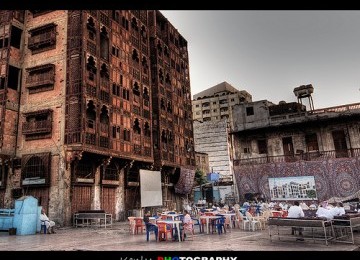
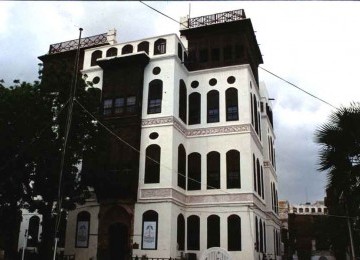
One of the places worth visiting while you enjoy the atmosphere of Al-Balad, Jeddah, Saudi Arabia, is an ancient building which has recently been renovated. Imposing building called the Temple Nassif (Nassif House) This is one of the most luxurious houses in Al-Balad. He is now regarded as a symbol of wealth in the past Jeddah.

Nassif Temple is now a cultural center where you can attend the exhibition or special lectures given by experts in their fields.

By browsing each room in it, we can learn a lot about the interior as if contained in the houses in Al-Balad in the past.


One interesting point is finally revealed when the five-story building houses, they use camels trained to go up and down carrying construction materials and goods, especially to the kitchen on the fourth floor. Indeed, this staircase-shaped ramp which separated the transverse beams, until comfortable for humans or animals to walk on it.

Nassif Temple had 106 rooms are partially used as a showroom works of art are amazing. In addition to works of art from wood, you can view the works of Arabic calligraphy on tile or wall.

There is an interesting anecdote related to how large and complex building. On one occasion, a thief entered the house. Of course, not with good intentions. But in wandering in the house, he realized that he really lost. Too long he tries to find a way out, but still lost. Finally he lost his mind and despair. When someone found him, he immediately gave up and asked for arrest!
People usually recognize the Temple Nassif as "House with Trees" because that's the only house in Al-Balad who have trees. Of course, to plant trees in this region is not easy, because of scarcity of water. But that does not apply to trees tough this type of mahogany (Azadirachta indica), which estimated his age as old as the house.

Nassif House Construction began in 1872 and completed in 1881 to a man named Sheikh Omar Effendi Nassif, who later became governor of Jeddah. This house belongs Nassif family until 1975.

One of his heir, Sheikh Mohammed, made the Temple Nassif as a personal library. This library eventually managed to collect about 16,000 books, which can be read by anyone who visits. Now the books belonging to Abdul Aziz University Library.

Although now people can enjoy all the commodities of modern life, but a walk in Al-Balad to admire the houses or buildings of this ancient, still represents a very interesting experience. Maybe you are interested in seeing the beautiful carved doors or ornate balcony. Or maybe you are interested in trying to get lost in it.

But do not worry, the hassle of getting lost in the middle of the halls of the Temple Nassif with a history like that, the enchanting beauty and charm will remain remembered as one of the silliness of the most memorable in your life.

Source:www.republika.co.id
Read More...
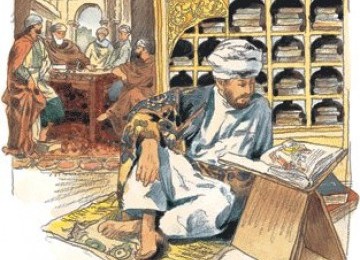
Al-Balad, the Old City in the Wild Cosmopolitan

Al-Balad, or the old city of Jeddah is one of the attractive tourist destinations which eman (unfortunately) to be passed. It literally means the city of Al-Balad. It is a historic district and popular tourist destination in Saudi Arabia. Moreover, Jeddah is the second largest city of this country after the capital Riyadh.

Al-Balad reminiscent of ancient cities are perpetuated in the tales of Arabian Nights and has become part of nearly every boy's childhood. This area is really interesting to be targeted in the list of your tour in Saudi Arabia.


Historically, about 2,500 years ago, Al-Balad is a fishing village. This is where the tribes of fishermen residing Quda'a first. As time goes by, this small village has grown into a cosmopolitan city that blends Arab traditionalism and Western luxury. Now, Al-Balad became the central headquarters of several important companies Arabia, and the commercial center of the country.

As a popular attraction of Saudi Arabia, Al-Balad is a paradise for shoppers (shopaholic). Al-Balad Maybe not as grand and fancy shopping centers in the West, yet he is the best place for shopping in Saudi Arabia.

Al-Balad is a large market featuring traditional street markets, street vendors until the centers and retail outlets. Tourists can buy almost all kinds of products in the small town, ranging from traditional handicrafts to international brands.
But for those of you that are less fond of shopping, one of the tourist attractions that can be enjoyed is a walk through the town while enjoying the exotic old buildings are still preserved and looks sturdy.

This old city was first built in the 7th century, and aims as the center of Jeddah. But in the 1940s, the city walls that protect this area was demolished. In 1970 up until the 1980s-when the Jeddah began booming oil-rich because many residents of Jeddah who moved north, away from Al-Balad because it is considered less offers prosperity.

Jeddah city itself is located in western Saudi Arabia, overlooking the Red Sea, with a total area of ​​800 square kilometers. Jeddah grown into the most important cities in the Kingdom of Saudi Arabia, along with the increasing status as a center of economic, industry and trade.

Jeddah comes from the Arabic for grandmother. This refers to Eve-wife of the Prophet Adam (first human)-are said to be buried in the city. When Islam appeared in the Arabian Peninsula, Jeddah is closely related to the historical development of Islamic religion, since he became the Two Holy Mosques gate by sea.

Source:www.republika.co.id
Read More...
powered by Blogger | WordPress by Newwpthemes | Converted by BloggerTheme