• Imagen 1 Married to Prevent from Zina Actions
    Marriage is very important in the life of the Islamic ummah. Islam strongly encourages marriage, because marriage is valid according to sharia means has completed half of his faith and follow the sunnah of the Prophet Muhammad.
Bookmark and Share
Showing posts with label Muhammad. Show all posts

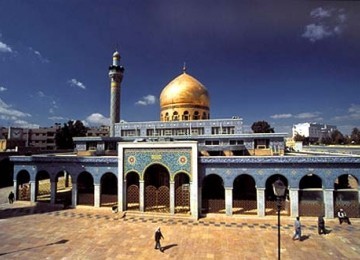
Lady Zainab Mosque of Damascus, Integration of All Forms of Beauty

One of the goals of pilgrimage and spiritual tourism draw another in Damascus, Syria, is the Mosque of Lady Zainab. Mosque graceful style as well as Iran's tomb is located in southern Damascus. The mosque is attracting Shiite Muslim pilgrims from Iran and around the world because of architectural pottery that bluish Sayiddah and the tomb of Zainab, the daughter of Ali bin Abi Talib, the granddaughter of Prophet Muhammad.

Most of the tourists or pilgrims who visited Damascus often miss the tomb of Lady Zainab, but its existence is very valuable as a building full of beautiful and emotional scene for Shiite Muslims in Karbala and Najaf out in Iraq. Visiting this place is so easy to use taxis, and even non-Muslim visitors are welcome to come, but it is limited outside the tomb area.


Tomb and Masjid Zainab Sayiddah is believed to be the former home of Siti Zainab, daughter of Ali bin Abi Talib (the fourth Caliph Rasyidah). He was taken prisoner by the army of Yazid bin Muawiyah after the massacre of his brothers, Hassan and Hussein, in Karbala and Najaf. For Shiite Muslims today, when families Ali betrayed is a decisive moment and the most tragic in their history. Thus, the atmosphere at Lady Zainab Mosque compound is not a ritual or worship a calm and quiet, but the passion that diruapi mourning lament, singing, crying and 'torture' ourselves with chest pounding.

The mosque itself was built since the 1990s, on top of an existing cemetery. Indeed, the location of this mosque is a bit hard to find, he is like hidden behind a row of shops, markets and hotels. To find it, simply by looking at one of the towering blue towers, or better yet, by following the flow of black-robed pilgrims who flowed toward the entrance.

This mosque consists of a courtyard with buildings in the middle. In architecture, this mosque has all the characteristics typical of Iran's mosques, decorative ceramic ornaments featuring blue, gold layer, and mirror glass. The mosque is protected shiny gold dome.

Page mosques are full of men and women who marched in a circle, singing songs in Persian or Arabic, banging their chests. Often this action deliberately recorded with a video camera. The scene is led by a priest.

When the singing and beating his chest, the flow of tears rolled down their cheeks, as if they felt the painful tragedy experienced by Zainab when lost brother and a prisoner. In this ritual, as if they were attending his own funeral Zainab. And that's how Shia look at the events that befall the Prophet's grandson.

Tomb complex itself is divided into two parts; for men and women. Footwear must be left at the front door of the tomb. The room's tomb, though relatively small but always crowded. Space for the congregation of women and men are only limited by thin wooden walls. Laments and sobs of the two parts are inter-shouted replied to the other side.

Not only from the room a woman, from any room pilgrimage men sobs that sounded no less thrill. All those present, old or young to sit in a circle while hitting his chest, weeping and wailing. Ekstasenya So, some people even threw myself into the tomb wall, hugging, rounded and shower with kisses. Others knelt and prayed, their foreheads against the stone fragments taken from the earth of Karbala.

Historians say that Mousa Murtadha-grandfather's tomb guard the tomb-building complex from a mixture of stone, brick and wood. In 1870 the ceiling is shattered tomb was renovated with brick and wood frame reinforced by Salim Murtadha, which gave custody to her son's tomb, and then its successor the eldest. Currently Lady Zainab's tomb complex is managed by a committee co-chaired by Hani Murtadha and Mohammad Ridha Murtadha.

In 1952, Mohammad Rida Murtadha prepare Lady Zainab Mosque complex scheme with an area of ​​150 x 190 meters square; widely page 90 x 90 meter wide main hall square and the mosque 30 X 30 square meters. Mosque floor covered with shiny marble tiles. This mosque has four gates, each four meters wide with a porch area of ​​four meters, too.

10-meter-high roof of the mosque is covered with ceramic and porcelain beautiful Iran. Plates coated with pure gold dome that makes it sparkling in the day or night, more attractive viewed from all directions.

If architecture is considered as an integrated art prints, then the Lady Zainab Mosque represents the value of aesthetics and modern Islamic architecture. He enriches the Islamic heritage and the heritage of the world because mempertautkan all forms of artistic beauty, photography, jewelry, calligraphy, as well as applied arts such as porcelain, mirrors, glass, decor, carpet weaving, and wrapping lighting.

To expand the area of ​​the mosque, on the recommendation of the Minister waqaf and the Department of Housing, the committee bought several real estate development next to it in 1979 and allocate the necessary budget to launch the expansion project, which until now has not been done.

The Committee made the mosque as a religious tourism business worked professionally with employees as many as 90 people. One of the other committee duties is to fund and protect the mosque and manage finances. Now the Lady Zainab Mosque is one of the religious tourist sites in Syria, visited by more than a half million people each year.

Source:www.republika.co.id
Read More...

Learning from the "Folly" Umar bin Khatab

By: Nur Akbar Agustiar

We would be familiar with Omar bin Khatab one of four prominent caliphs after the death of the Prophet Muhammad. Umar also known for its ketegesan and tenderness of his heart. Even the Prophet SAW said, "If no prophet after me then he is Omar bin Khatab". (H.R Tirmidhi and Ahmad)

Narrated never once found the Prophet Muhammad Umar bin Khatab was crying and then laughing about the same. When asked what was causing it so. Umar bin Khatab explained that he thought his situation in the ignorant past. Why did he cry, he remembered when the ignorance he buried his daughter alive.


I wish I thought of her daughter is still alive. He will be with them. And grandchildren will get a lot of them.

So that made him laugh at the ignorance is when he used to make idols. Sometimes he made from wheat and sweets.

But when he was hit by hunger or famine. So he was forced to take the parts of graven images are then memakannya.Mendengar that Prophet Muhammad was also laughing.

From this story we can take a very valuable lesson. The period of ignorance is also known by the darkness or ignorance.

Where reason and conscience does not function properly. Call it the two things that mebuat Umar bin Khatab cry and laugh when remember it.

In the ignorance of women do not have price at all. Even having a daughter is a big disgrace. Since it is considered useless, can not fight and could not pass on the triumph and glory. Even women were considered something that can be inherited. Is like a good or a mere inanimate object.

Burying girls alive is inhumane. It therefore could be called typical person is ignorant does not have a conscience. Common sense also should reject this. But what happened is the opposite.

The second event, where Umar ibn Khatab ate his god that he has made his own. If common sense working properly then the mind will reject the god that can be made and eaten. Or the god that can be created and destroyed.

Once Umar ibn Khatab embraced Islam and became a friend of the Prophet Muhammad. He realized it would be folly. He regretted it when he foolishly bury his daughter alive. So he cried when remembering the event. And Umar bin Khatab laugh at his stupidity. How is possible, once he makes his god worship and eat it.

Praise be to Allah SWT, Essence of the Almighty, Most Great. With His Shari'a is carried through the hands of the prophet Muhammad SAW, has issued human beings from ignorance and the primitive's. And teaches us to use conscience as it should. It also teaches us to be a humane human. And Allaah knows best-bish shawab.

The writer is the Indonesian students currently studying in Cairo, Egypt.

Source:www.republika.co.id
Read More...

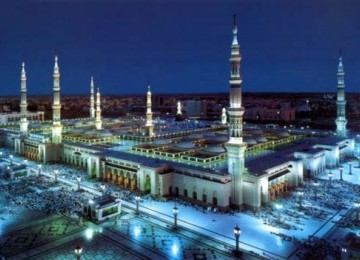
Nabawi Mosque, the Mosque of the Prophet

City of Medina, commonly called Madinah Al-Munawwarah, is the main city in Saudi Arabia. Medina is a bustling city diziarahi or visited by the Muslims from all over the world. There is where the Prophet's Mosque, one of the three main mosques in addition to the Grand Mosque in Makkah and Masjid Aqsa in Jerusalem, Palestine.

The Prophet once said, "Madinah is haram (holy land) from this to this, should not be cut (cut) tree, and should not be carried out heresy in it. Whoever makes heresy (or protect those who do heretics) on it, then he hit curse of Allah, angels, and all mankind. "


The town is located about 600 miles north of Makkah Municipality has a population of about 600,000 inhabitants. For Muslims this city is considered as the second holy city after Mecca. At the time of the Prophet Muhammad SAW, this town became the center of preaching, teaching and the Islamic government. This is where the message of Islam spread throughout the Arabian peninsula and throughout the world.

Early in the development of Islamic preaching, this area known as Yathrib, a center of economy and trade in the region. When the Prophet migrated from Mecca this city, he later changed his name to Medina. Gradually the city became the center of propaganda and the Islamic government until the Prophet died and was buried there.
Prophet's Mosque is the second mosque built by the Prophet after the Quba Mosque, founded in the course of his hijrah from Mecca to Medina. Prophet's Mosque is the first mosque built the Prophet when he arrived in Yathrib (Madinah).

Its location is the place where he stopped the camel ride. This place is a place for drying dates originally owned by two orphan brothers Sahl and Suhail bin Amr. Rasulullah then buy it and then build a mosque and his residence.

Originally the mosque was built is very simple, with a clay material, piled palm trees and thatched palm midrib. Foundation only in the form of stacked clay mold stack. The Prophet himself who led the construction of a mosque measuring approximately 50 mx 50 m is approximately in 622 AD.

The layout of the mosque building was deliberately made governance a bit like building a house of the Prophet in Makkah. Part of the roof of the mosque was left open just like that. During the first nine years, this mosque without lighting at night. Only at the time of Isha, held a little illumination by burning straw.

After that, on one side of the mosque, built the residence of the Prophet. The residence of the Prophet is not how much and nothing more luxurious than the state mosque, of course, only more closed. In addition, there are also parts of the mosque which is used as a place of poor people who do not own a house, known as the Ahl Suffah or the occupants of the terrace of the mosque.

After that many times the mosque was renovated and expanded. Renovation of the first undertaken by the Caliph Umar ibn al-Khattab in the year 17 H, and the second by the caliph Uthman ibn Affan in the year 29 AH Later in the ruling Umayyad dynasty, Caliph al-Walid ordered the architects and engineers Arab expansion and the physical restoration of building the Mosque of the Prophet, another term of Masjid Nabawi.

Although these large-scale development, but the Caliph still wants the original structure of the mosque is not changed. In addition, the executing engineers also built the tower that serves as a muezzin call to prayer chanted. Minaret, at the time, considered a new element in the architecture of the mosque.

In the reign of Sultan Abdul-Majid I-Ottoman Dynasty-Nabawi Mosque renovation again occur. This time on a large scale. The Emperor ordered that all buildings demolished mosque, except the Prophet's room. Further expansion of the mosque to be rebuilt with up to 1293 meters. This is the last expansion before the Prophet's Mosque is handled by the government of Saudi Arabia.

At the time of King Fahd, the Prophet's Mosque again expanded in 1414 H, so that the building area of ​​almost 100,000 square meters. Coupled with the construction of floors above the vast reaches 67,000 square meters and the court which can be used for prayer area of ​​135,000 sq. m. The entire complex of Nabawi Mosque can now accommodate approximately 700,000 pilgrims.

Prophet's Mosque has a number of virtues, such as the Prophet stated, "One prayer in this masjidku, greater reward than a thousand times prayers in other mosques, except in the Grand Mosque. And one more time praying in the Grand Mosque more than one hundred major thousand times prayers in other mosques. " (Reported by Ahmad)

"No need to put up the vehicle, except for visiting three mosques: Masjid al-Haram, this masjidku (Masjid Nabawi), and the Aqsa Mosque." (Bukhari, Muslim and Abu Dawud)

That's why the City of Medina and especially the Prophet's Mosque is the Muslims are always crowded with visitors from all over the world when the pilgrimage or Umrah.

In the Prophet's Mosque have a place called Raudhah (Parks), a place where all the prayers and diijabah granted by Allah SWT. No wonder the Hajj or Umrah pilgrims would spend the time to pray in this glorious place.

Source:www.republika.co.id
Read More...

Justice of the Prophet for non-Muslim Peoples

By: Harun Yahya *

In the Qur'an, Allah commands the believers to be fair. "O believers, be you people who are firmly for justice, as witnesses for Allah even against yourselves or parents and the kin. If he is rich or poor, God knows better kemaslahatannya. So do not you go on air passion for wanting to deviate from the truth ... " (Surah An-Nisaa ': 135)

With his rules apply to Muslims, justice and tolerance towards people of different religions, languages, races, tribes, and his attitude that does not distinguish between rich and poor, but treating everybody the same. Prophet is the best role model for all mankind.

In a verse of the Quran to the Messenger of Allah said, "They are people who like listening to falsehood, of devouring anything forbidden. If they (Jews) come to you (to ask for the decision), then decide (this matter ) between them or turn away from them, if ye turn away from them, then they will not give you the slightest harm. And if you decide their case, then decide (this matter) in between them with justice. Truly Allah loves those who the fair. " (Surat al-Ma'idah: 42)


Obey the Prophet of Allah, even against a stubborn kind of people they (Jews), and he never made concessions in upholding justice. She became a role model of all time with the words, "My Lord commanded to run (enforce) justice." (Surat Al-A'raf: 29)

A number of incidents proves justice of the Prophet. He lived in a place where people of different religions, languages, races, and ethnic coexistence. It is very difficult for them to live together in peace and harmony and supervise those who are trying to spread disunity. One group can become aggressive and even attack the other group through words or deeds. However, justice is the source of the Prophet peace and security for other communities, just as applicable to Muslims.

During the time of Prophet Muhammad SAW, the Christians, Jews and pagans of all treated equally. Messenger of holding on to verse, "There is no compulsion to (enter), religion (Islam)," (Surat al-Baqara: 256), and explaining the true religion for all people, but frees them to make a choice themselves.
The attitude of the noble Prophet of Islam in total harmony with the morality of the Qur'an, should be a role model in treating the adherents of different religions. Justice of the Prophet provide an understanding to people of different races. In the sermon, his sermon, he often states that the advantage lies not in race but in godliness. As Allah states in the Qur'an, "... Verily the most honored of you in the sight of God is the most pious among you ..." (Surat al-Hujuraat: 13)

Two hadith, he emphasized the principle of justice: "You are children of Adam, and Adam came from dust. It should stop people boast of their ancestors" (Abu Dawud).

"Lo-nasabmu nasab be because you are not allowed to berate the person; you are all descendants of Adam ... No one is more than others, but because religion and takwanya ..." (Reported by Ahmad)

In Farewell Khutbah '(farewell sermon) Prophet emphasized several principles, "O mankind! Verily your Lord is one. Remember! There is no advantage over the Arabs above others Arabs, nor is there excess for people other than Arabs for Arabs, not too there is an excess of red-skinned people over black people, and not all black people on the red skin, but because of piety. For behold, the most honorable among you is the most pious to God. " (Bayhaqi)

The agreement made with the Najran Christians in southern Arabian Peninsula is another exemplary example of the Prophet justice. One of the clauses in the agreement reads, "Life Najran and its surrounding community, their religion, their land, property, livestock, and people who attend them or not, their messengers and their places of worship are under the protection of Allah and guardianship His Prophet (Muhammad). "

Medina Charter, signed by Muslim immigrants from Mecca, the indigenous people of Medina, and the Jews of Medina is another example of the importance of justice of Allah. As a result the constitution, which established justice between communities with different beliefs and ensure the protection of their interests, and end the hostilities that occurred over the years. One of the most remarkable feature of this agreement is dikokohkannya religious freedom.

Medina Charter One article states, "The Jews of Bani 'Awf are one nation with the Muslims. The Jews have their religion and Muslims have them."

Article 16 of the agreement reads, "The Jews who follow us certainly entitled to our support and equality the same rights as any of us. It will not be harmed or his enemies will not be helped."

The Prophet Companions to stick to the Charter of Medina that, even after his death. And they even apply to people Berbers, Buddhists, Brahmins, and people of other faiths.

One of the main reasons why the golden age of Islam is one of the shadow period of peace and security is a fair attitude of the Prophet, and it is a reflection of Qur'anic morality.

Therefore, the only solution to stop the fighting and conflicts around the world is to adopt the morality of the Qur'an. As the Holy Prophet, he was never away from the path of justice, and he never discriminate people based on religion, language, or race.

* Harun Yahya was born in Ankara in 1956. He studied fine arts at Istanbul's Mimar Sinan University and philosophy at Istanbul University. Since the 1980s, he has published many books about politics, monotheism, and scientific science.

Source:www.republika.co.id
Read More...

The Beauty in the Life of Prophet Muhammad

Although many books have been written about the figure of the Prophet Muhammad, but the purity and clarity of quality and governance of the great kramanya continues to flow. Series of the Prophet's life reveals the glory of nature, magnanimity performance or in attitude, and personal excellence. With this, people of faith can satisfy their thirst for spiritual their determination to become better human beings.

Along with the many duties accompanying the Message of the Prophets, he also carries a duty to teach people about the beauty and revive the senses and awareness. Verily Allah a beautiful, noble Qur'an are also beautiful, and the whole beautiful universe. Prophet, no doubt, is the best person to teach beauty.


1. The beauty of a smile. Yes, the smile is the kind of superior beauty. This is also the universal language of mankind. Smiling means to feel all the excitement, joy, and compassion toward humans. Like a painting, a smile is a beautiful picture.

Prophet Muhammad was known to have a face that always smiled. Jarir ra said, "The Messenger has never refused to see since I embraced Islam. Every time he sees me, he would see me with a smile." (Bukhari).

The Prophet not only maintain a beautiful smile on her face, but also encourage others to smile. "The smile on your brother is charity." (Reported by At-Tirmidhi). "Do not belittle any good deed, even if it was just meeting with your brother with a cheerful face." (Muslim).
2. The beauty of appearance. Prophet was always wearing the best clothes that he had. Before you meet with the envoys, he will wear clothing appropriate to the status and tradition of each delegation. Rasulullah also like perfume. From Ayesha, "I'm obtaining splashed scent (perfume), the best to the Prophet." (Muslim).

The Prophet forbade any person who eats onions or garlic into the mosque. He supports the beauty in general as one of the beloved of Allah SWT. In a hadith, he said, "Allah beautiful and loves beauty."

3. The beauty of a soft attitude. The Prophet is reported to have said, "Gentleness can not be found on anything but it adds to its beauty, and not deprived of anything except that it made defective" (Muslim). So, the softness is a jewelry and beauty, while violence is a bad thing. Prophet's noble conduct all affairs with tenderness, and he urged the implementation of gentleness in all affairs, both state and private.

The following examples demonstrate the softness of his character is remarkable:

a) The Prophet will speed up the prayer in the prayer when he heard the baby crying, with consideration of the anxiety of the mother towards her child.

b) Once the Prophet never stop the movement of troops because of concern about a bird who are grieving because their children were arrested by some soldiers. The army was again moved forward after the soldiers return the child to its mother bird.

c) He avoided a direct warning to his people. Messenger prefer to reprimand the smooth words like, "What about people who feel too proud to do my own thing to do?"

d) The Messenger of spoiling her children and joking with them. Anas said, "The Prophet was always hanging out with us (the kids), sometimes he said to my sister, 'O father Umair, what do these little birds?" (Bukhari).

e) The Prophet Muhammad allowed his house be used as a playground. Aisha said, "I used to play dolls in the house of the Prophet, and my girlfriends are also used to play with me. Every time the Prophet came (to my place), they hide, but the Prophet always call them to join and play with me." (Bukhari).

f) The Prophet once said, "Do not none of you who say,''my soul be evil, 'but should say,' my soul to be cruel." (Bukhari-Muslim).

According to Ibn Hajar, citing Al-Khattabi, evil and cruel almost identical in meaning, but the Prophet did not like the word evil nature and choose a safer cruel expression. Indeed, this is his habit to replace the unpleasant term with more subtle. This hadith implies that the vocabulary that is not fun to be avoided. The point is to avoid phrases like "my soul be evil" is an act of kindness toward yourself.

g) The Prophet had great respect for his wives and treat them gently. For example, he usually offers his knee to step on his wife (Safiyyah) whenever Safiyyah want to ride camels.

h) The Prophet of Islam often berkhutbah about the "softness" of God to man. In a hadith, he said, "When God has completed His creation, He wrote on his Throne, 'My Mercy control my fury." (Bukhari-Muslim).

Still want to be a grumpy person, hater, pendongkol and vindictive? Never, ah! Prophet certainly did not like his people accepted that. Hopefully we can imitate the behavior of the Prophet, even though only a small portion.

Source: www.republika.co.id
Link: http://islamic-core.blogspot.com/
Read More...

Testament of Prophet Muhammad

By: Nur Akbar Agustiar

From Abu Najih 'Irbadh bin Sariyah (rodhiallahu' anhu) he said, "The Prophet Muhammad once advised us that throb with the advice and shed tears. We asked, O Messenger of Allah, it seems this is a parting advice, because it give us advice. He said, "I bequeath to you to maintain devotion to Allah 'aza wa Jalla, subject to obey (the leader) even if you are led by a slave (Ethiopia). Because the people who live after me will see many disputes. Let you hold fast to my Sunnah and the Sunnah Khulafah Rasyidin who provided instructions (God). Hold firmly with the sunna molars and depart from the teachings of the new (in religion) because all innovation is misguidance. "(Reported by Abu Dawud and Tirmidhi).


Prophet Muhammad had predicted the state's people after the death of his later. There will be a huge dispute on the people of the Prophet Muhammad. Because he also told his companions intestate as a handle in the future. This will also apply to us, and all the people of the Prophet Muhammad. There are two wills Prophet Muhammad described by friends as thrilling and shed tears.

First, piety to God and submit to the leader. Devotion to God Almighty is the key provision, the main provision for Muslims. Anyone who follows the rules of God. Away from His prohibitions, and carry out His commandments. He would certainly have saved the world hereafter. Obedient to the leader to minimize discord. In the event of rebellion to the leader. Or vote of no confidence to the leaders. So the bloodshed can not be inevitable. History has recorded many such things.

It is also guaranteed by God, His Word, "O ye who believe, obey Allah and obey His Messenger, and ulil amri among you. Then if you are different opinions about something, refer it to Allah (Qur'an) and Prophet (Sunnah), if you truly believe in Allah and the Last Day. That is more mainstream (for you) and the better the outcome. " (An Nissa [4]: ​​59).

Second, firmly adhere to the sunna and the sunna Prophet Khulafah Rasyidin. As menggitnya with graham teeth. Here is how the Prophet Muhammad warned us he tuk uphold traditions. If we look at the verses which hinted to obey Allah SWT is always adjacent to obey His Messenger.
View (Ali Imran [2]: 32), (An Nisa [4]: ​​13, 14, 59, 80), (Al Anfaal [8]: 24, 46), (Al Maidah [5]: 92)

This shows how important it is to uphold the sunna Prophet Muhammad and menghidupakannnya. So is the sunna Khulafah Rasyidin. Four friends who we know as the first four caliphs. Known for his religious splendor and proficiency in the lead. Namely Abu Bakr As Shidiq, Umar ibn Khattab, Uthman ibn Affan, Ali ibn Abi Talib.

According to Imam Nawawi that is Khulafah Rasyidin are the four caliphs, namely: Abu Bakr, Umar, Uthman and Ali. Imam Ibn Daqil 'Eid also explained that they are the four caliphs were based on consensus. Ibn Taymiyyah in Minhaju As Sunnah An Nabawiyah, explaining that the Prophet Muhammad has told us about their leadership, "Caliphate after me lasted for thirty years. Abu Bakr held the government for 2 years, 10 years old Umar, Uthman and Ali 12 years 6 years ". And Allaah knows best-bish shawab.

*) The writer is the Indonesian students currently studying in Cairo, Egypt.

Source:www.republika.co.id
Read More...

Wisdom from God's grace toward Luqmanul Hakim

By: Ibn Tiangfei

Luqmanul Hakim is an ordinary man and not a prophet, but he's given a tremendous gift from Allah 'Azza wa Jalla form of wisdom. Written in the holy book Koran. Some messages are very wise and advice touching the heart and invites us to the truth (wise messages and advice will be discussed in next article). According to some history, he was a slave who is black, thick-lipped, and have the soles of the feet are cracked. About the origin Luqmanul Hakim, there is a history that says that he came from Egyptian Sudan. (Photo: misteridunia.wordpress.com).


There are several versions about the name of Judge Luqmanul real. Some say that his name is Luqman bin 'Anqa bin Sadun. Some say that his name is Luqman bin Tsaran. Others say that his name is Ibn Ba'ur bin Nahir bin Aazir (quoted from the book Washaaya Luqmanul Judge min al-Sunnah Book was the work of Majdi Muhammad ash-Syahawi).

According to popular opinion among scholars, that the judge is a trustee Luqmanul wise and righteous, but not a prophet. Then the scholars disagree about the work Luqmanul Hakim. Some say that he is a seeker of firewood. Some say that he was a carpenter. Some say that he is a shepherd of sheep. Some say that he was a tailor. And still others say that he was a judge among the Children of Israel at the time of the Prophet Dawud as
A Decent Story We Think

One day, lord of Luqmanul Hakim once said to him, "Slaughter a sheep, then give me two sheep body parts were the best."

Then Luqman gave him the tongue and liver sheep.

After that, the master ordered him to slaughter the sheep again, and ordered him, "Put the two parts of the body was the worst sheep."

Then Luqman also throw the tongue and liver of sheep.

Found it, his master said, "I ordered you to give me two parts of the body the best sheep and then you give me the lamb tongue and heart! Next I ordered you to remove two parts of the body of sheep the worst, and you also get rid of it tongue and calf's liver. Why so? "

Luqman replied, "Because there is no body part that is better than both if both are good, and no part of her worst of both if both are bad. (Tafseer al-Qurtubi: 14/42, 140-141, Qashash Al-Qur'an: 198-199, az-Zuhd, Ahmad: page 65, Tafseer Ibn Katheer: 3 / 536).

Subhanallah, really in the wisdom contained in the words of Luqman above. Although, according to history, he was a slave who is black, thick-lipped, and have your feet are cracked, but he has given a tremendous gift of wisdom from Allah 'Azza wa Jalla. The messages and advice from Luqmanul Hakim very touching hearts and always invites us as Muslims to the truth. In fact, some advice narrated by the Prophet Muhammad sallallaahu 'alaihi wa sallam.

It shows that Allah 'Azza wa Jalla never differentiate in terms of physical and tribes of each of His servants who believe. And the things that distinguish the presence of Allah 'Azza wa Jalla is their faith and taqwa. And it is appropriate that we as people of the Prophet Muhammad sallallaahu 'alaihi wa sallam would hear different advice coming from various ethnic groups, as long as advice is based on sharia and guidance of the Prophet Muhammad sallallaahu' alaihi wa sallam. To be continued, Insha Allah.
Read More...

About Wisdom Creation Ants (1)

By: Ibn Tiangfei

Humans live in the world is not alone. There are some other living creature who also created and placed on this earth, that animals and plants as living things are real classes and spirits as supernatural beings class. Mankind as real living beings and equipped with a mind willing to learn and deservedly took the precious life lessons about the behavior of other living beings is also real, ie animals and plants, not a supernatural creature. For indeed all cases that supernatural is something Allah 'Azza wa Jalla. We as human beings are only given a little knowledge
  Photo:www.tahukah-kamu.com
about the unseen problems. Allah Almighty says,
                  
"And they ask thee (Muhammad) about the spirit. Say, 'The Spirit including my Lord, while you have been given knowledge of only a few' ". (Surat al-Isra ': 85).

"Say (Muhammad), 'There is nothing in heaven and on earth who knows the unseen things, except God. And they do not know when they will be raised '. " (Surah An-Naml: 65).


Ants as a result of the creation of small animals' The Architect 'Allah' Azza wa Jalla, it saves a lot of lessons that can be used as a lesson for us (especially Muslims). Maybe that's why the term ant immortalized as one letter in the Qur'an (An-Naml which means ant, a letter to 27) (And Allaah knows best.) If the various lessons about the life of ants studied, Insha Allah will be very beneficial for mankind. But one thing we must realize, that man as a creature who has limitations in thinking will not be able to know all the wisdom of the creation of ants (also wisdom creation of other living things). And, of course, only Allah Almighty who knows all the wisdom of the creation of His creatures. Some of the behavior of ant life lesson we can take include:

1. Ants always shake hands and greet each if they meet each other.
2. Ants always share food / drinks with other ants when they find a source of food / beverage new.
3. Ants can lift objects that load many times its body weight alone.
4. Ants always consistent and disciplined in the marching, following a predefined path. Except if there are no obstructions in front of them, they will try to find a way out. If it is found, they will go back into the ranks as soon as possible.
5. Ants always give priority to cooperation in lifting objects that can not be raised alone.
Descriptions are as follows:

1. Ants always shake hands and greet each if they meet each other.
Habits These ants can be a valuable lesson for us. Islam has taught to all his people to say hello when meeting with fellow Muslims. As has been exemplified by the Prophet Muhammad sallallaahu 'alaihi wa sallam.

From Abdullah Ibn Salam that the Prophet sallallaahu 'alaihi wa sallam said: "O people, scatter greetings, kinship hubungkanlah rope, give food, and sholatlah at night when people are asleep, you'll go to heaven safely." (Narrated by: At-Tirmidhi).

"This hadeeth narrated by Abu Hurayrah, he said: The Messenger sallallaahu 'alaihi wa sallam said: A driver should say hello to pedestrians and pedestrians greetings to the people who sit and fewer pilgrims membered greetings to pilgrims more membered many ". (Narrated by: Muslim).

Muslims are also obliged to answer the greetings of other Muslims.

"This hadeeth narrated by Abu Hurayrah, he said: The Messenger sallallaahu 'alaihi wa sallam said: There are five obligatory for a Muslim against a Muslim brother; answer greeting, praying for people who sneeze, the invitation, visit the sick and accompany the body." (Narrated by: Muslim).

With frequent interactions among fellow Muslims, it is expected to strengthen the relationship silaturrahim. Some hadith indicate that Allah 'Azza wa Jalla make silaturrahim as one of the causes rizki the field.

"This hadeeth narrated by Abu Hurayrah, he said, I heard the Prophet sallallaahu 'alaihi wa sallam said: Who is happy for her rizki field and in his end-his death (lengthen its age), then he connects ( rope) silaturrahim. "(Narrated by: Bukhari).

"Hadith Anas bin Malik radi 'anhu that the Prophet sallallaahu' alaihi wa sallam said: Anyone who likes to be made easy sustenance and lengthen his age, let him connect silaturrahim". (Narrated by: Bukhari).

"This hadeeth narrated by Abu Hurayrah, the Prophet sallallaahu 'alaihi wa sallam, he said: Learn about nasab-nasab you so that you can connect silaturrahim. Because the real silaturrahim is (because of) a love of family (close relatives), (because) the number of property and age. "(Narrated by: Ahmad, At-Tirmidhi and Al-Hakim).

That is the virtue to say and answer greeting that Insha Allah will produce a reward. And Allaah knows best.

No. 2 to no. 5 will be discussed in next article. Insha Allah.
To be continued.
Read More...

Turning Daily Sunnah of the Prophet Muhammad sallallaahu 'alaihi wa sallam (2)

By: Ibn Tiangfei

The position of a believer depends on their consistent commitment to the sunnah of the Prophet sallallaahu 'alaihi wa sallam. The more that followed the Sunnah of the Prophet, the higher their standing before Allah 'Azza wa Jalla.

Actually there are so many daily sunna Prophet sallallaahu 'alaihi wa sallam we can possibly follow. Ranging from how to worship, how to eat, I drink, I sleep, I dressed, how to purification, the way out of the house and all the habits and behavior in motion and silence.

In the previous article has discussed about the sunnah of bed. This article will discuss about the sunnah in and out of the toilet (bathroom), the Sunnah of wearing footwear and sunnah in costume (partially excerpted from the book 'Aktsir Min Alfi Sunnatin Yaumi Wal Lailah Fil' (1000 Sunnah Daily Prophet), the work of Khalid Al -Husainan).


Entry and Exit Sunnah Toilets (Bathroom)

1. Sign in with your left leg and came out with his right foot.

2. Reading the prayer time will come, which means:

"O Allah, I seek refuge in You from the evil men and evil women." (Narrated by: Bukhari and Muslim).

3. Reading the prayer when out of the toilet / bathroom, which means:
"Forgive me, O God." (Narrated by: Abu Dawud, Ibn Majah and At-Tirmidhi).
Subhanallah, Islam religion is really easy. Why? Because only by logging in and out of the bathroom to produce a reward if the practice of some sunnah above. In a day and night a Muslim can be many times in and out of the bathroom. It means a Muslim has the opportunity to add 'collection' reward, namely by following the sunnah of the Prophet sallallaahu 'alaihi wa sallam.
Sunnah in Footwear Wearing

Prophet sallallaahu 'alaihi wa sallam said,
"When any one of you wear footwear, must precede the right foot. When removed, let your left leg first. Or let him wear the two (a pair) or remove both (simultaneously) ". (Narrated by: Muslim).

Sunnah can be done by a Muslim many times in a day and night. For example, when he would leave and come home from work, when he would leave and come home from school, while going to and from the mosque and so forth. Beginning with the intention of worship, every time a Muslim wearing pads or bare feet, God willing, he will get a reward worth it.
Prophet sallallaahu 'alaihi wa sallam like to prioritize the right of doing things that are glorified (good).

Aisha said, "The Prophet Muhammad sallallaahu 'alaihi wa sallam loved putting that right as much as possible in all affairs, as in the purification, combing hair, and wearing sandals (slippers)." (Narrated by: Bukhari).

Instead, the Prophet sallallaahu 'alaihi wa sallam prefer the left side of doing things that are not glorified (dirty). For example when going to the bathroom, when out of the mosque, when you remove the sandals, when you remove the clothes and other things that convey the same with it.

Sunnah in Dress

Wear or take off her clothes is the work done repeatedly by a Muslim in the day and night. For example, when it will go to work, when it will go to school, when it will go to the mosque and so forth.
Wear or take off her clothes have come from some of the sunnah of the Prophet sallallaahu 'alaihi wa sallam. And when it is done with sincere heart, God willing, will produce a reward.

Some Sunnah in clothes:

1. Reading Bismillah when you use or remove clothing. Imam Nawawi rahimahullah said: "It is recommended in all work."

2. Read the usual prayers read by the Prophet sallallaahu 'alaihi wa sallam when wearing clothes, cloth or turban. Prayer is a means:

"O Allah, I beg thee to obtain his kindness and goodness of the goals of this clothing is made. I seek refuge in You from evil and evil purposes of this clothing is made. "(Narrated by: Abu Dawud, At-Tirmidhi and Ahmad).

3. When wearing clothes, starting with the right. This is based on the hadith the Prophet sallallaahu 'alaihi wa sallam,

"When you wear clothes then start with that right." (Narrated by: At-Tirmidhi, Abu Dawood and Ibn Majjah).

4. When removing clothing or fabrics, starting with the left.
Thus some of the sunnah of the Prophet Muhammad sallallaahu 'alaihi wa sallam that we should follow, for the degree of faith and piety can be increased in the presence of Allah' Azza wa Jalla. Regarding the other sunnah will be present at the next article. To be continued.
Read More...

Month of Muharram is a Month of Glory

By: Ibn Tiangfei

Today we have entered a new Hijri year as the only year that is fully owned by Muslims, so that the new year is called Hijri Islamic new year. The first month in the Islamic new year is the month of Muharram. Muharram or meaningful harram noble, so the month of Muharram is a glorious month. Why is it called a glorious month? Because in this month there are some virtues that must be considered as an effort to increase faith and piety, and turn the Sunnah Prophet sallallaahu 'alaihi wa sallam.
                                                                                         Photo: abundancesecrets.com
1. Allah 'Azza wa Jalla ban to all my people to do evil in the month of Muharram.

Allah Almighty says,
"Indeed the number of months according to Allah is twelve months, (as) in the ordinance of God at the time He created the heavens and earth, of which there are four months forbidden. That's what (provision) the right religion, so do not persecute yourself in (four months) that ... ". (Surat At-Tauba: 36).


"They ask thee (O Muhammad) concerning fighting in unlawful. Say: fighting in the month it is (sin) of ... ". (Surat al-Baqara: 217).

Month in question is illegitimate Zulqa'dah, Zulhijjah, Muharram and Rajab. In the fourth month, Allah Almighty forbade Muslims make war. Unless Muslims under attack in advance, according to the word of Allah 'Azza wa Jalla,

"Month by month haram haram, and (against) something that is respected in force (law) qisas. Therefore, whoever is attacking you, then attack him worth the attacks against you. " (Surat al-Baqara: 194).

There are differences of opinion among the scholars about the meaning of the ban do evil in the fourth month of haram. Some of them were of the opinion that the war in mean despotism is absolute. There is an opinion (and this is more correct) that the intent of tyranny is the prohibition of the start of war. There are also scholars who argue that what is meant by tyranny is sin and disobedience.
2. Implement the sunnah of fasting (fasting Ashura) in the month of Muharram.

Fasting Ashura is strongly recommended by Prophet Muhammad sallallaahu 'alaihi wa sallam. He said,

"Fasting is the most important after the fasting of Ramadan is fasting the month of Muharram." (Narrated by: Muslim).

History and the Primacy of Ashura Fasting

"The people of Quraish used to fast on the day of Ashura in the jaahiliyyah, the Prophet sallallaahu 'alaihi wa sallam was doing at the time jaahiliyyah. When he arrived in Madinah, he fasted on that day and ordered his followers to fast." (Hadith Sahih Bukhari History 3 / 454, 4/102-244, 7 / 147, 8 / 177, 178, Ahmad 6 / 29, 30, 50, 162, Muslim 2 / 792, 753 Tirmidhi, Abu Daud 2442, Ibn Majah 1733, Nasa'i in Al-Kubra 2 / 319, 320, Al-Humaidi 200, Al-Bayhaqi 4 / 288, Abdurrazaq 4 / 289, Ad-Darimy 1770, Ath-Thohawi 2 / 74 and Ibn Hibbaan in his Saheeh, 5 / 253) .

"The Prophet sallallaahu 'alaihi wa sallam arrived in Madinah, then he saw the Jews fasting on Ashura day. He asked:" What's this? "They said:" A good day, this is the day that God saved the Israelites from their enemies them, then Moses fasted on that day as a form of gratitude. " Then he Prophet replied: "I have more right to Moses than you (Jews), then we will fast on that day as a form of exaltation we are against that day." (Hadith Sahih Bukhari History 4 / 244, 6 / 429, 7 / 274, Muslim 2 / 795, Abu Daud 2444, in Al-Kubra Nasa'i 2 / 318, 319, Ahmad 1 / 291, 310, Abdurrazaq 4 / 288 , Ibn Majah 1734, Bayhaqi 4 / 286, Al-Humaidi 515, Ath-Thoyalisi 928).

Two hadith above shows that the Quraish tribe fasted on the day of Ashura in the jaahiliyyah, and the Prophet sallallaahu 'alaihi wa sallam has been done before hijrah. Then, when arriving in Madinah, he found the Jews fasting on that day, the Prophet was fasting and asked his followers to fast. So the Prophet sallallaahu 'alaihi wa sallam to do the fast of Ashura is not because it follows the Jewish people, because the Prophet sallallaahu' alaihi wa sallam has been carrying out fast before he went to Medina.

Some scholars think about the number of days and fasting on Ashura:

1. Fasting for 3 days, on 9, 10 and 11 Muharram

2. Fasting for 2 days, on 9 and 10 Muharram

3. Fasting for 2 days by selecting one, ie on 9 and 10 or 10 and 11 Muharram

4. Fasting for 1 day ie the 10th of Muharram only

The majority of scholars choose how fast of Ashura no. 1, because they tend to be careful in following the Sunnah of the Prophet Muhammad sallallaahu 'alaihi wa sallam.

And Allaah knows best.
Read More...

The essence of Hijrah

Hijri New Year events always remind Muslims migrated to the event and the companions of the Prophet Muhammad from Mecca to Medina. Most important events in sirah Rasulullah that is the foundation behind the selection of the name of the Islamic calendar.

Certainly not without reason Commander of the Faithful 'Umar ibn Al-Khattab set hijrah events as the basis for calculating the year in the Muslim calendar. Hijrah means to move with the left one place to another place, or altered by leaving a condition to get to the other conditions. In Islam, there are two kinds of hijrah.


First, migrate hissiyyah (physically moved with switching places), from Dar khauf (country unsafe and not conducive) to the Dar AMN (the country is relatively safe and conducive), such as the hijrah from Mecca to Habasyah City (Ethiopia) and from Mecca to Medina.

Second, ma'nawiyyah migrated (hijrah value). Namely, by leaving the values or conditions of ignorance to change toward the values or conditions Islami, as in the aspect of belief, worship, morality, thinking and mindset, muamalah, social, lifestyle, family life, work ethic , self-management, time management, mission management, struggle, sacrifice, as well as aspects of ourselves and other life in accordance with the demands and consequences of Islamic faith.

If the move is conditional and situational hissiyyah and must comply with certain conditions, migrate ma'nawiyyah absolute and permanent, and simultaneously is a requirement and the basis for the implementation hissiyyah hijrah.
Hijrah ma'nawiyyah This is actually the nature and essence of the command moved it. The key is the word change! Yes, when someone has vowed creed and claim to have faith and berislam, she should direct her ma'nawiyyah migrate towards a total change - would still follow the principle tadarruj (phasing) - according shibghah rabbaniyah (see Surah Al-Baqarah [ 2]: 138) and meet the demands of the kaffah berislam (see Surah Al-Baqarah [2]: 208).

In order to welcome - and not celebrate - new year 1432 Hijri, we must do muhasabah and self-introspection by asking, how far the changes, the increase and improvement in self-Islami has happened and our lives, both in the scale of individual, group, congregation, community , the nation, as well as in the scale of Muslims as a whole?

Let us make this momentum Hijri New Year as a motivating factor reformer spirit and determination to keep ourselves and moved toward the totality of the life of Islam as a precondition and basis in carrying out missionary mandate and enforce the obligation of jihad fi dinullah sabilillah to win and reach the heaven and the pleasure of God.

Source:www.republika.co.id
Read More...

Muhammad Institute Want to Build The Space Launch Site in Canada

Muhammad Institute for Space Studies, an organization in Canada dedicated to placing the Islamic world back to the forefront of scientific discovery, to build a space rocket launch facility in Canada.

Muhammad, who is also Head of the Institute astrophysicist Vancouver, Redouane Al Fakir, of the opinion if countries like India, China, and Japan could launch a satellite into space then Canada could do the same.

''It could not be maintained longer if Canadians do not have the ability to launch a space rocket,''said Al Fakir in an interview.


Al Fakir want all the people of Canada are involved in this project. He offers the first space launch for his country. According to him, this is only a matter of time.

The father of two children aged 50 years who is now a British astronomer at Columbia University, has decided to do something in order to realize these dreams. The purpose originally, he wanted to launch a spacecraft or satellite to orbit Earth. After that evolved into the moon, Mars, and other space.

Al Fakir was looking for two locations on the beach that will be the center of the launch of this spacecraft, which is in Tofino and Prince Rupert. Second place was quite secluded location, but still accessible by road, making it idel for the site.
He also is collecting its funding mainly from the Middle East, although it is not easy. Al Fakir estimates will cost about 100 million U.S. dollars to build the rocket launching facilities and 500 million U.S. dollars to launch the rocket.

Al Fakir money already pledged $ 250 dollars to start raising funds from overseas. In fact, he recently started a trip to Doha, Qatar, to explain his plan to officials there. He claimed delighted with the support given to him. ''I was surprised because they are very enthusiastic about listening to the plan.

In addition to Qatar, he hoped to cooperate with other Islamic countries like Saudi Arabia and United Arab Emirates. ''Of course, these countries are one big cultural unity, and we want to cooperate with the Islamic world, with the Gulf states and others such as Malaysia and Indonesia,''he said.

Al Fakir also will take advantage of the Institute of Muhammad's connection to get a non-government investors to realize the project. Institute of Muhammad is a nonprofit institution founded in 2008 and located on the campus of the University of British Columbia.

Source:www.republika.co.id
Read More...

Turning Daily Sunnah of the Prophet Muhammad sallallaahu 'alaihi wa sallam (1)

By: Ibn Tiangfei

Muslims obliged to turn the Sunnah of the Prophet Muhammad sallallaahu 'alaihi wa sallam as a manifestation and proof of love of God' Almighty and His Messenger. As word Dzun-Nun al-Mishri rahimahullah: "Among the signs of love for Allah 'Azza wa Jalla is to follow his beloved (Prophet) sallallaahu' alaihi wa sallam in morals, deeds, orders, and the Sunnah-Sunnah". (Photo: islamic-wallpapers.com).
Allah Almighty says,

"Say, if you love Allah, then follow me, Allah will love you and forgive you your sins, and Allah is Oft-Forgiving, Most Merciful". (Surah Ali 'Imran: 31).


Abu Najih, Al 'Irbad bin Sariyah: "The Messenger has given advice to us with a thrilling advice and make the tears streaming." We asked, "O Messenger of Allah, that advice seemed to advice from people who would be separated forever (die), then give us a will". Prophet said, "I give testament to you to stay devoted to God, the Sublime Majesty, still hear and obey even if the order you a slave (slave). Verily whosoever of you are still alive will undoubtedly see many disputes. Therefore Be firm and stick to the sunnah Khulafah sunnahku Rasyidin a straight (get directions), and keep you with the Sunnah-Sunnah that strongly. And ye shun new things because really all heretics were misled. "(Narrated by: Abu Daud and At-Tirmidhi).

The position of a believer depends on their consistent commitment to the sunnah of the Prophet sallallaahu 'alaihi wa sallam. The more that followed the Sunnah of the Prophet, the higher their standing before Allah 'Azza wa Jalla.
When viewed more profound, in fact there are so many daily sunna Prophet sallallaahu 'alaihi wa sallam we can possibly follow. Ranging from how to worship, how to eat, I drink, I sleep, I dressed, bersucinya way, way out of his house and all the habits and behavior in motion and silence.

There may be of some daily Sunnah Prophet sallallaahu 'alaihi wa sallam who unwittingly have become our living habits. Blessed are the believers are able to follow the sunnah of the prophet consistently.

Here is a daily sunnah of the Prophet sallallaahu 'alaihi wa sallam who quoted from the book' Aktsir Min Alfi Sunnatin Yaumi Wal Lailah Fil '(1000 Daily Sunnah of the Prophet), by Khalid Al-Husainan.

Wake Sunnah

1. Former wiped sleep from his face with his hands. Nawawi and Ibn Hajar rahimahullah recommend it based on the hadith,
"So the Prophet sallallaahu 'alaihi wa sallam wake up, then sat down, as he wiped the sleep from his face with his former hands." (Narrated by: Muslim).

2. Read the following prayer, which means:
"All praise be to Allah Who has turned us after we turned off and to Him we will be raised." (Narrated by: Bukhari and Muslim).

3. Doing miswak. The evidence is: "When awake the night, the Prophet sallallaahu 'alaihi wa sallam rubbing her mouth with miswak". (Narrated by: Bukhari and Muslim, Agreed alaih).

4. Istintsar (inhaling water into the nose and then release it). Prophet sallallaahu 'alaihi wa sallam said,
"If any one of you wake up, let suck water three times, because the devil lodged in her nostril." (Narrated by: Bukhari and Muslim, Agreed alaih).

5. Washing the hands three times. Prophet sallallaahu 'alaihi wa sallam advised,
"If any one of you wake up, so do not put his hand into the water except after washing three times". (Narrated by: Bukhari and Muslim, Agreed alaih).

To be continued Insha Allah.
Read More...

Allowed Speaking during Friday Khutbah is being Held

By: Badrul Tamam

Praise be to Allah. Blessings and greetings to the Prophet terlimpah hopefully, family, and his companions.

At Friday sermons delivered, for congregational Friday prayers must still listen to them carefully. Whoever speaks for itself that turned the attention to the sermon is futile; was doing the Friday prayers.

It was narrated from Abu Hurairah radhiyallaahu 'anhu, the Prophet shallallaahu' alaihi wasallam said:

إذا قلت لصاحبك أنصت والإمام يخطب يوم الجمعة فقد لغوت

"If you say to your brother on Friday, 'shut up!" While the priest was berkhutbah, then really you have done in vain. "(Narrated by Bukhari and Muslim and others)


Al-Hafidh Ibn Hajar in Fath Baari said, "In this hadith, the Prophet sallallaahu 'alaihi wasallam has determined that commanded silence when speech is a form lahwun (deeds in vain), although its form and prohibits ma'ruf command of the evil. This hadith also shows that every word of that annoying than listening to sermons, legal lahwun. And if you want to order silence those who spoke, with a gesture. "

He added, "The above hadith a proof of a ban on all kinds of words at the time of sermon, and thus it is the opinion of the majority of scholars to the people who listen to sermons."

It was narrated from Abu Darda 'radhiyallaahu' anhu said, "One day the Prophet shallallaahu 'alaihi wasallam was sitting on the platform, then he had in the presence of human speech and read a verse. Beside me there is Ubay. I asked him, "O Ubay, when this verse was revealed?" She will not talk to me. Then I asked him, but he still refused to talk to me.
When the Messenger shallallaahu 'alaihi wasallam was down then Ubay said to him, "You do not get from Jum'atanmu except vanity." So when the Prophet shallallaahu' alaihi wasallam contrary, I (Abu Darda ') came to him, then I tell about earlier. Then the Prophet shallallaahu 'alaihi wasallam said, "Ubay true, When you hear imammu berkhutbah, hush thee, so he finished." (Narrated by Ibn Majah and Ahmad in al-Musnad no. 21 627 and 21 184 which by muhaqqiqnya Al-Zain declared saheeh isnad )

Ibn Abdilbarr rahimahullaah said, "There is no difference of opinion between the jurists' attention to the country about the necessity of silence for the people who heard the sermon," (Al-Istidzkar: 5 / 43). But after it was mentioned a difference of opinion among some mutaakhirin, but was not considered a difference that is recognized as contrary to the saheeh texts. As mentioned in the madhhab Syafi'iyah, Inshat (silent listening to the sermon) is mustahab and not mandatory. Imam Nawawi in Al-Majmu ': 4 / 523 mentions, in this inshat law there are two famous opinions. But what is authentic in these schools, that this inshat mustahab (recommended), not mandatory. (Al-Majmu ': 4 / 523)

There is a history of Ahmad in al-Mughni (3 / 194), are not forbidden to speak.

Jumhur While scholars have argued, are forbidden to talk during the sermon delivered. And inshat when it is mandatory. While madhab Hanafi opinion, speaks during sermon makruh tahrim though it be a amar ma'ruf, exalt, or the other. (Al-Bahr al-Raaiq: 2 / 168)

In the book of al-Mudawwanah stated, "If the priest berkhtubah, it was also obliged to cut off talks, facing him, and still listen to it." (Al-Jalil Mawahib: 2 / 530)

When did Prohibition Talking It Effective?

Indeed ban talking here only apply when the sermon. Hence before the sermon starts allowed to speak even though the priest was sitting on the dais. Likewise, when the priest had ended his sermon, be allowed to speak before the prayers began.

Imam Malik narrated in al-Muwatha ', from al-Quradzi Tsa'labah, they were at the time of Umar bin Khattab prayers on Friday that Omar out. So when Omar was out and sat on the dais, and the muezzin call to prayer, we sat chatting. Then when the muezzin Umar stood silent and deliver sermons, we were all quiet and none of us spoke.

Ibn Syihab said, "The release of the priest cut the prayer, while his words break the word (jama'ah)." (Al-Hawalik Tanwir, p.. 125)

This is the schools' Ata, Thawus, Bakr al-Muzani, al-Nakha'i, al-Shafi'i, Ishaq, Ya'kub, Muhammad and also narrated from Ibn Umar.

While talking in between two sermons, there she opinions. In the al-Mughni mentioned, al-Hasan al-Basri allow it. Meanwhile, Malik, al-Shafi'i, Ishaq al-Auza'i and forbade it. (Al-Mughni, Ibn Qudama: 2 / 200)

Who's Talking Allowed

There are several conditions that are allowed to speak while the priest delivered his sermon. Namely:

1. For people who do not hear his sermon the priest by the distance or deaf or other causes, he should busy themselves dhikr and prayer, without disturbing the other. narrated by Abdurrazaq in Mushannafnya (3 / 213), from Ibn Juraij said, "I asked 'Ata,' I do not hear (speech sounds) of the priests. May I glorify, bertahlil, and prayed to God for myself and my family and I call them by their names? 'He replied,' Yes (fine) '. "

Ibn Qudama in al-Mughni (2 / 167) states, "For people who are far away so that dhikr to Allah Ta'ala, reading the Qur'an, the Prophet bershalawat shallallaahu 'alaihi wasallam, and do not raise (harden) voice."

2. When the priest came out of the sermon proper provisions, such as talking vanity, the illicit praise praised, denounced the people who should not be censured, or like him. So the congregation is not required to quiet, he may speak. Is Sa'id bin Jubair, al-Nakha'i, al-Sya'bi, Ibrahim Ibn Muhajir, and Abu Burdah speak when al-Hajjaj her sermon. They said, "We are not commanded silence to this." (See: Al-Mughni 2/165-166, al-Syarhu Shaghir al-Imam al-Dardiri owned al-Maliki's 1 / 183, and a-Bahru al-Raaiq belong to Ibn Najim al-Hanafi 2 / 160).

This opinion is also shared by Ibn Hubaib, al-Lakhmi, Ibn al'-Arabi, and al-Dasuqi of scholars Malikiyah (See: al-Taaj wa al-Iklil by al-Maliki Mawaq 2 / 550 and al-Dasuqi Hasyiyah 1 / 615).

3. People who spoke to the priest as a lavatory or a priest to talk with him. This is based on the hadith of al-Salik Ghathafani, he entered the mosque on Friday when the Prophet shallallaahu 'alaihi wasallam is berkhutbah. Then he asked, "Did you pray?" He replied, "Not yet." He said, "Get up and pray two rak!." (Narrated by al-Bukhari and Muslim)

Also based on the story of Umar bin Khattab radliyallah 'anhu when berkhutbah on Friday, suddenly Uthman ibn' Affan entrance. Umar then cut his sermon to call it and say, "Why do people cry echoed late after?" Uthman replied, "When I heard the Adhan calls, I can not do more than just wudlu 'and then leave...." (Narrated by Muslim)

In Shahihain from Anas, someone entered the mosque on Friday when the Prophet shallallaahu 'alaihi wasallam was his sermon. He said, "Yes Rasulallah, property was destroyed and supplies have been exhausted, pray to God for rain down on us." Then he raised his hands as he prayed, "O Allah sends down rain on us, O Allah sends down rain on us." (Narrated by al-Bukhari and Muslim).

Ibn al-Qayyim in al-Hadyu al-Nabawi (1 / 427) said, "He shallallaahu 'alaihi wasallam sermon disconnected because of an apparent intent, or a question from one of shabatnya then he answered and then return to continue his sermon, and perfected it."

4. Words that he must spend to help people's lives, such as a blind person would warn the wells so that he does not fall into it, or there is a snake, or a fire and a for instance. (Al-Mughni: 2 / 168) in such conditions, one must talk to save the life of the person or person's property. And Allaah knows best.

Source:www.voa-islam.com
Read More...

Married to Prevent from Zina Actions

By: Ibn Tiangfei

Marriage is very important in the life of the Islamic ummah. (Picture: kembanganggrek.wordpress.com). Islam strongly encourages marriage, because marriage is valid according to sharia means has completed half of his faith and follow the sunnah of the Prophet Muhammad. This is based on the words of the Prophet Muhammad,

"Whoever got married, then he has completed half of his faith. And should he devoted to God in maintaining the other half. " (Narrated by ath-Thabrani in Mu'jamul Ausath (no. 7643, 8789)).


"Whoever is blessed by God with a woman (wife) who Shalihah, then truly Allah has helped him to carry out half of his religion. Then let him devoted to God in keeping the other half." (Reported by ath-Thabrani in Mu'jamul Ausath (no. 976) and al-Hakim in al-Mustadrak (II/161)).

Never one point three companions of the Prophet sallallaahu 'alaihi wa sallam came to ask the wives of the Prophet sallallaahu' alaihi wa sallam about his religious services. Then once explained, each wanting to enhance their worship. One of them said: "As for me, then I'll really fast all the time without interruption." Other Companions said: "As for me, then I will pray night forever." Another said, "Honestly I would stay away from women I will not marry forever ... etc. "When it was heard by the Prophet sallallaahu 'alaihi wa sallam, he came out as he said:

"Did you guys have said such and such? By Allah, I am the worst fear of Allah and to Him the most taqwa among you. But I fast and I break the fast, I pray and I sleep, and I also marry women. So, anyone who is not liked my Sunnah, it does not include my lineage. "(Reported by al-Bukhari (no. 5063), Muslim (no. 1401), Ahmad (III/241, 259, 285), an-Nasa- i (VI/60) and al-Bayhaqi (VII/77)).
"Marriage is my sunnah. Those who are reluctant to implement my sunnah, then he is not of my lineage. Marry you!" For indeed I am proud with the large number of you in front of the entire Ummah. Hucksters of whom have the ability (to marry), then marry. And he who has not able, let him fast because fasting is a shield for him (from a variety of lust). "(Narrated by Ibn Majah (no. 1846)).

From the statement above hadith, it is for anyone who has the ability (in body or mind) to get married. Due to get married to prevent someone from fornication, and multiply the Muslims at the end of time later. Marriage to maintain the dignity and sacredness of ourselves and families.

So great benefits that can be taken from a wedding. Therefore, a Muslim who has the ability to be highly loss if it should delay the wedding. Especially if there are people who decide to live celibacy (alone). Humans who have the intellect will not want to plunge himself into the hole error by celibate. In fact, living a life of celibacy is dry and arid, life has no meaning and purpose. Those who delay marriage or the celibate will always be together which is always raging passions to the spirit and spiritual purity becomes turbid. Selves: they will always be in upheaval against nature. Despite their devotion to be reliable, but the upheaval that occurred continuously will gradually weaken the faith and resilience of life and damage the health and will take him to the valley of adultery.

So, while it was still given the opportunity and ability to get married, get married, O my brothers.
Read More...

Let us bequeath Goodness

As the supreme creature of God's creatures, humans must perform its duties and mandate in the face of the earth kekhalifahannya well. Life should not be interpreted simply as a gift (enjoyment), but also mandate that demands the duties and responsibilities.

Man must work hard to be able to pass on the good that is large (Leaving a legacy) for mankind. If possible, it is greater than the age given by God. In a sense the job done, people have an understanding of diverse and different. At least, there are four stages in this matter.


First, people who work for a living (to live), rather than live to work. He defines his work simply looking for a bite of rice. The main motive is the physical-material work. This is a phenomenon most people ('ammat al-nas).

Second, people who work to enrich the comradeship (to love). He defines his work not only looking for treasure, but to reproduce the association and friendship. The main motive is a relation-social work, friendship, or communication amongst humans (interhuman relations).

Third, people who work to learn (to learn). He defines his work as a vehicle for seeking knowledge, the experience, and test capabilities. So, unlike the previous two, the main motive of this third person is an intellectual.
Then, fourth, people who work to share the pleasure and pass on the good of the maximum to others (to leave a legacy). He defines his work as worship to Allah SWT. The main motive is spiritual work (spiritual). Word of God, "And, I did not create the jinn and men but that they may serve Me." (Surat Al-Dzariyat [51]: 56).

A fourth person this is the best person as designated by the words of the Prophet SAW, "Khair-u al-nas anfa'uhum li al-nas (the best man is the greatest benefit for others)." (HR Thabrani from Jabir).

According to the author of the book Faydh al-Qadir, al-Manawi, the benefits that can be given through charity, namely our ability to share kindness to others, either through property (bi al-mal) and power (bi al-jah) we have. The legacy of kindness that, according to al-Manawi, the benefits could be something mundane, such as donations and material support, or it could be something worth religion (ukhrawi), such as science, thoughts and teachings that brighten and bring men to the good.

In fact, according to al-Manawi, a legacy in the form of the latter is considered more noble than the first. Why? Therefore, the second is to bring greater benefits for humans, not only in the world, but also in the Hereafter. And Allaah knows best.

Source:www.republika.co.id
Read More...

Women's Role In Fostering Families (1)

By: Shaykh Salih bin Fauzan Al Fauzan hafizhohullaah

By the name of Allah the Most Compassionate and Merciful.

Verily all praise be to Allah only. We praise Him, ask for help and begged forgiveness of Him. And we seek refuge in Allah from the evils of ourselves and our evil deeds charity. Who is Allah give guidance, then nothing can be misleading. And who God led astray, then nothing can give him guidance. And I bear witness that there is no worship of truth, but God alone. No partner for Him. And I bear witness that Muhammad is His slave and Messenger, may Allah pour sholawat and greetings to him, and to his family, and his companions.

Wa ba'du,

Our conversation related to a Muslim woman. And talk about a Muslim woman at this current time I looked pretty important. Because women in our society is being attacked at random by the enemies of this religion, where in effect the so-called "qodhiyyatu l mar` ah "or" qodhooyaa l mar `ah" (the problem of female-important life.) And what they mean by this term is to remove women from the condition / situation desired by God against him.


We never knew that women have problems in addition to problems of the people of Muslim women themselves. Indeed ignorance of Islam are Muslims and their weakness in holding him is problematic people and Muslim women. And this is what we seek to explain in a public lecture entitled "The role of women and foster family" is. But we have some comments on this title.

First, about the notion of "tarbiyah". Where do we mean with it is the broad meaning of the terms "build" and everything to be consequences such as family and keep watching. So do not let anyone think that tarbiyah was just repairing and straightening behavior. This is one tarbiyah coverage. Medium tarbiyah for wider family from this side.

Second, probably from this title will be understood that women have a role in fostering the family but that role is a secondary job for him. Yet the truth is that women's work in fostering the family is the most important job is that in others is an exception. If the title of this public lecture is "woman's role is to nurture the family", then it is better.
Place Women

This issue requires clarification and information, then we say: actually a reasonable place for a woman is at home and it was there where she worked. This is a basic principle. And this is supported by the arguments syar'iy and this is the logic of nature with which she created.

In connection with the postulates syar'iy above this, the texts and concrete realities that support it quite a lot. Among them:

1. He said the direct word to the ummahaatul mu `miniin:

وقرن في بيوتكن

"And dwelt in your homes" (Al Ahzab: 33).

Sayyid Qutb said: "In this verse there are subtle signs that the house should be a place of origin in their lives. And the house is as "maqorrun" (place of residence-important life.) Who other than the home is a temporary exception that they are not allowed to settle and dwell on it except for the purposes and even then only a modest course. (FII zhilaali l qur `aan 59, 5 / 28 prints of the tenth, Ash Syuruq).

2.
لا تخرجوهن من بيوتهن ولا يخرجن

"Do not remove them from their homes and they do not (allowed) to the outside '(Ath Tholaaq: 1)

This verse is even associated with a woman who is undergoing a period iddah, but the scholars said the ruling was not attributed to him but also includes other women. Penisbahan in "your home" or "house" (the two verses above-important life) when the house is usually owned by a husband, it is penisbahan showing placement, rather than ownership. As if, in principle, the house is a residence for women.

3. In the stories of the prophets there is a lesson and ibroh. Like the story of Moses with two women:

ولما ورد ماء مدين وجد عليه أمة من الناس يسقون ووجد من دونهم امرأتين تذودان قال ما خطبكما قالتا لا نسقي حتى يصدر الرعاء وأبونا شيخ كبير

And when he arrived at the source of domestic water of Midian he found there a group of men who are to drink (their flocks), and he found the back of the crowd, two women who were inhibited (flocks). Moses said: "Did you mean (in doing at that)?" Both women said: "We were not able to drink (our animals), before the shepherd-herdsmen were repatriated (flocks), our father is an old man who had advanced in years" . (Q.S.28: 23)
Until word of God:

قال إني أريد أن أنكحك إحدى ابنتي هاتين على أن تأجرني ثماني حجج فإن أتممت عشرا فمن عندك وما أريد أن أشق عليك ستجدني إن شاء الله من الصالحين

Said he (Syu'aib): "Verily, I intend to marry you with one of these my two sons, on condition that thou serve me for eight years and if you complete ten years, it will be (grace) from thee: but I do not want overwhelm you. And God willing you will find me among those who are good ". (Q.S.28: 27)

Let us look at the lessons in this paragraph.

Moses was the shepherd was in the source water and behind them there are two women who would hinder their goats for the goat is not mixed with the crowd. Moses asked the two women were, what's wrong with you? Why do not you watered you with these people?
Came the answer: we are unable to give drink to the cattle herders were repatriates them. Two women have piety and Waro attitude 'that prevents them from mixing with men. Then, as if there is another question arises, what makes you come out? Then came the answer directly: and our father is a parent who is old. There are urgent needs and requirements that require them to exit. And although they were forced to come out, they still maintain the character and manners by not mingling with men.

Then there is another lesson where one of the two women think that it's time everything was back to its original state (ie they no longer leave the house to get water for their cattle-important life.)

قالت إحداهما يا أبت استأجره إن خير من استأجرت القوي الأمين

One of the two women said: "O my father take it as people who work (on us), because actually the best person you've taken to work (on us) was a strong person who can be trusted anymore."

Syu'aib also accept the solution and he made a bid to Moses:

قال إني أريد أن أنكحك إحدى ابنتي هاتين على أن تأجرني ثماني حجج

Said he (Syu'aib): "Verily, I intend to marry you with one of these my two sons, on condition that thou serve me for eight years .." (QS28: 27)
Moses had accepted the offer and everything was back to normal. Moses worked herding cattle, and the woman becomes a wife who works at home. Thus the Qur'an tells us, and indeed in their stories that there are valuable lessons.
4. Pray in the mosque it is deeds that masyru 'for men and is one of the most utama.Terlebih deeds longer pray at the mosque the Prophet shollallahu'alayhiwasallam, and with him. Nevertheless, the Prophet shollallahu'alayhiwasallam ordered the women to pray at home. As the wife of Abi Humayd Saa'idiy, behold, he came to the Messenger of shollallahu'alayhiwasallam and said: "I like to pray with you". Then he said: "I know that you liked the prayer with me, but the prayers at the corner of the room was better than prayers in the room. And prayers in the room was better than prayers in the house. And prayers in the house is better than your people prayers at the mosque. And prayers at the mosque that your people better than prayers in masjidku ". Then the wife was also ordered Humayd Abi made for him a place of prayer in the most deep and dark in his house. And he was praying in situ until the end. (This Hadith issued by Ahmad 6 / 371 and by Ibn Khuzaymah in Shahihnya 3 / 95. Hadith is hasan. See "haasyiyatu la'zhomi 'alaa shohiih Ibni Khuzaimah).

Cue in this Hadith is quite clear that the origin is the persistence of a woman in the house. To the extent that the Messenger of Allah shollallahu'alayhiwasallam prefers praying at home for a woman, rather than praying in the mosque he shollallahu'alayhiwasallam though he allowed a woman to go to the mosque.
5. The reality of Muslim women in the early centuries, which is exemplified by-example to support this. Where do we get that out of a woman and she works outside the home is an event that almost could be calculated, and have the causes which require for such. Even so that is what is understood by the Companions. It was narrated that Ibn Mas'ud was asked by his wife to give her a veil. Ibn Mas'ud said: "I'm afraid you'll leave wearing the hijab that God has for you." His wife said: "Hijab is it?". Ibn Mas'ud said: "Your house."

6. Taught by the shari'ah is that is in accordance with nature. "What is God Who created it does not know (that you reveal or conceal), and He is Subtle, the Knower?" (QS67: 14). Indeed persistence of a woman in the house is the logic of nature in accordance with the duties and character and a guard of kekontradiktifan keterceraiberaian and personality. Psychological scientific experiments have given support to this. As some researchers are fairly objective in the West have delivered the call to minimize the negative consequences of a work that elicits a woman contrary to the nature and character. However, the worshipers of lust is so deaf to every person who calls it. They even accused him as the person who invites the women to return to the setback and slavery, so they make a claim! And there will be an additional explanation about it on the sidelines of the discussion.

Regarding the release of Women's Issues Meyikapi

It should be understood that the release of a woman is not forbidden absolutely. It has been narrated some information that indicates bolehnya women come out and work outside the home, but this situation is not the origin of law, but rather as an exception and urgent needs.

One of the history of this is allowed by the Prophet shollallahu'alayhiwasallam a woman to pray in a mosque even though he prefers prayer of the woman at home.
Similarly, a history of participation as a woman in a few battles to water and treat the injured.
The caller liberation of women, or rather the destruction of the female caller from imitators among the passions, has been holding with this history. As well some people who have become low sedemikiran ourselves before the pressure of foreign civilizations, also have made history as the argument to defend Islam, in their expectations.

To answer this, we say: actually discharge a woman and she works outside the home is not something absolutely forbidden. There could be an urgent need to come out as the release of two daughters Syu'aib. It can also become a matter that is needed for this race as a woman who teaches her fellow sisters or provide treatment for them. For things like this that the arguments out of a woman was understood. And that is a state of exception, not the condition of origin. Hence we get the Imam Ibn Hajar said: could be the release of women with a force that has dinasakh. In which he explains in "Al Ishoobah" living history Kabsyah Umm Al Qodho'iyyah and said his Hadith issued by Abu Bakr ibn Abi Shayba and Ath Thobrooniy and others from the path of Al-Aswad bin Qoys from Sa'id ibn 'Amr Al Qurosyiy that Umm Kabsyah a woman from Qodho'ah said: "O Messenger of Allah, allow me to come out with troops like this and this." He said: "No". Umm Kabsyah said: "O Prophet of God I'm not want to fight. But I want to treat the wounded and the sick, and I'll be handing out drinks. " He said: "If only it did not become a sunnah and will say: the fulanah never come out (in a troop) of course I will let you. However, sit down (do not follow-important life). " This Hadith was also issued by Ibn Sa'd and in the end, "Sit down, do not let the people say that Muhammad fought with a woman." Then Ibn Hajar said: This Hadith and Hadith which earlier in the life history of Umm Al Aslamiy Sinaan can be integrated on to say that this tradition menasakh the previous hadith. Because the previous hadith during the war of Khaibar, was this tradition after Fathu Makkah. (Al Ishoobah 4 / 463)
However, these arguments Thabit to expel most cases women and their ikutsertanya in treating the wounded and to share a drink, but it is limited conditions are mixed in accordance with the measure and is not to defeat the condition of origin. And quite important to distinguish clearly between the workings of a woman outside the home as a legal origin and the views it as an exception.

If he is an exception for certain circumstances, then we will not run out of solutions to overcome the negative impacts that may arise with the release of a woman. But here is not the place to describe the solutions that. As if out of a woman was used as a matter of origin as viewed by some people who are Westernised, where they saw that the woman will still not benefit anything if he works at home. And this is a paralysis of half the society. I say: if we go with this direction, then the negative impacts from the release of the women, and all the consequences will emerge as occurred in Western society.

Will appear mafsadat-mafsadat ikhtilat, and mafsadat-mafsadat empty house of a mother's role, although we use various procedures and even though we mean it for that, and although some people tried to cover it up with a deceptive slogan: "get out in corridor in accordance with the teachings of the shari'ah and our culture. " Then we need to understand that when it is received by us that the origin is that a woman working at home and that she works outside the home is an exception and that is what is determined based on the arguments syar'iy, then after that we are no longer have a choice between beriltizam with this or not beriltizam with him, if we are really Muslims.

وما كان لمؤمن ولا مؤمنة إذا قضى الله ورسوله أمرا أن يكون لهم الخيرة من أمرهم ومن يعص الله ورسوله فقد ضل ضلالا مبينا

"And it is not proper for men of believers and not (also) for women who are believers, when Allah and His Messenger have set up a provision, there will be for those options (the others) about their affair. And whoever disobeys Allah and His Messenger, then surely he has been misguided, misguided real. "(QS33: 36)

This verse is even down to a particular case, but its content is general. Then he fell after the verses shollallahu'alayhiwasallam Prophet ordered his wife to stay in their homes.

God has explained that the action left, and turn away from, his shari'ah is a definite cause-no doubt-for a person suffering such circumstances the majority of mankind on the earth today.

ومن أعرض عن ذكري فإن له معيشة ضنكا ونحشره يوم القيامة أعمى

"And whosoever turns away from My reminder, verily for him is a narrow livelihood, and we will menghimpunkannya on the Day of Judgement in a state of blind". (Q.S.20: 124)

And the real state of the people who have manhaj manhaj straight but they leave it and seek other manhaj in waste of human thought, as disclosed by the poet:

Like a camel that died of thirst in the desert sahara
Moderate water on his back he carry

(To be continued insha Allah)

Source:akhwat.web.id

Read More...

powered by Blogger | WordPress by Newwpthemes | Converted by BloggerTheme